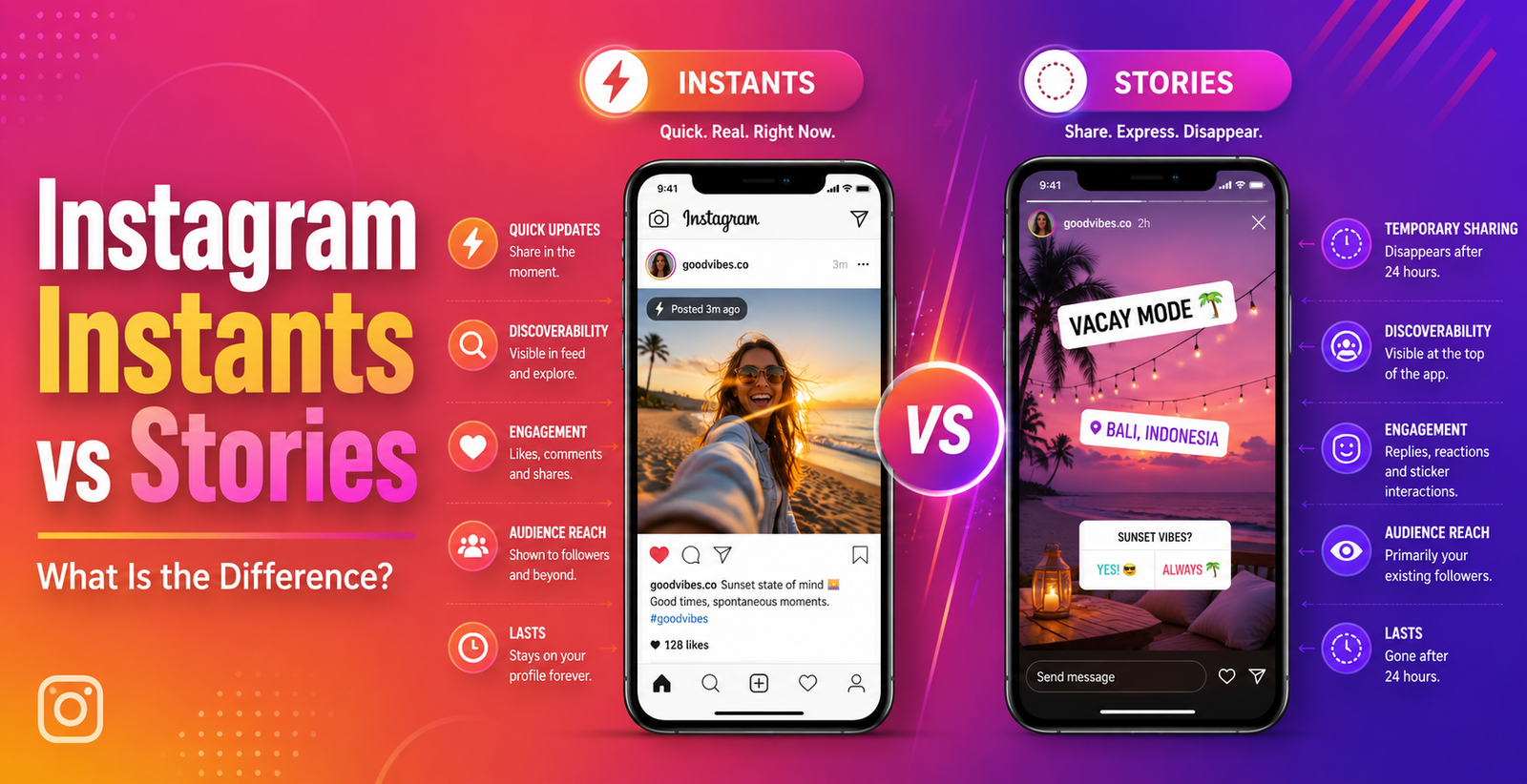

Instagram keeps adding new features to make sharing faster, more personal, and more connected. Two features that may look similar at first are Instagram Instants and Instagram Stories. Both help users share moments, but they are not the same. Stories are already one of the most popular Instagram features, while Instants are a newer way to share real time photos with a smaller audience.
Instagram introduced Instants as a way to share photos in the moment with Close Friends or mutual followers. Instants disappear after someone opens them and cannot be viewed after 24 hours. They are designed to feel raw, quick, and authentic. Stories, on the other hand, are temporary photo or video updates that remain visible for 24 hours unless added to Highlights. Instagram says photos and videos shared to Stories disappear from feed, profile, and Direct after 24 hours unless saved as Highlights.
Table of Contents
ToggleWhat Is Instagram Instants?
Instagram Stories are temporary visual updates that allow users to share photos, videos, text, stickers, polls, links, music, and other interactive elements. Stories appear at the top of the Instagram app and can be viewed by followers based on your privacy settings.
Stories stay visible for 24 hours. After that, they disappear unless you save them as Highlights or keep them in your archive. Instagram’s Help Centre explains that Stories disappear from feed, profile, and Direct after 24 hours unless they are added as Highlights.
Stories are used by almost everyone, including creators, influencers, small businesses, brands, and personal users. They are useful for daily updates, product promotions, event coverage, polls, questions, announcements, and community building.
How Instagram Instants Work
Instagram Instants focus on real time photo sharing. Users can access Instants through the Instagram inbox or through the standalone Instants app in countries where it is available. Meta says users can tap the mini pile of photos in the bottom right corner of the Instagram inbox, take a photo in real time, add a caption, and send it to Close Friends or mutual followers.
A major difference is that Instants do not allow uploads from your phone gallery. This means you cannot pick an old photo, edit it heavily, and share it later. You have to capture the photo in the moment. Meta also says users cannot make further edits before sharing Instants.
This keeps the feature casual and authentic. It reduces the pressure to create polished content. The receiver can react with emojis, reply, or send an Instant back. This makes Instants feel like a private photo conversation rather than a public post.
How Instagram Stories Work
Instagram Stories work in a broader and more flexible way. Users can upload photos and videos from their gallery, capture new content using the camera, add text, use filters, insert stickers, add music, mention accounts, create polls, ask questions, and add links if available.
Stories can be shared with all followers, Close Friends, or a selected audience depending on account settings. Unlike Instants, Stories can be more planned and creative. A business can design a Story for a sale. A creator can use Stories to promote a new Reel. A coach can use the question sticker to collect audience questions.
Stories are also more public than Instants. Even though you can limit Story visibility, the feature is usually used for wider audience engagement. This makes it better for marketing, announcements, and regular content updates.
Instants vs Stories: Content Lifespan
The biggest difference between Instants and Stories is how long the content can be seen.
Instants disappear after they are opened by the recipient. Even if they are not opened, they cannot be viewed after 24 hours. This makes Instants feel more private and temporary. The short lifespan encourages quick reactions and fast conversations.
Stories stay visible for 24 hours. During that time, followers can view them multiple times, react, reply, click links, vote in polls, or interact with stickers. If the creator adds a Story to Highlights, it can stay on the profile for much longer.
For creators and brands, this difference matters. Instants are better for quick and personal sharing. Stories are better for content that needs more visibility during the day.
Instants vs Stories: Editing Options
Instants are designed to be raw. Meta says users cannot upload Instants from their phone gallery and cannot make further edits to them before sharing. Users can only take a real time photo and add a caption.
Stories offer many more editing options. Users can add stickers, music, filters, text, links, mentions, countdowns, polls, questions, GIFs, and drawings. This makes Stories more suitable for creative communication.
For example, if a clothing brand wants to promote a new collection, Stories are more useful because the brand can add product photos, pricing, links, and polls. If the brand wants to share a quick real time moment from a photoshoot with close followers, Instants may be more suitable.
Instants vs Stories: Audience and Privacy
Instants are more private by design. They are shared with Close Friends or followers you follow back. This makes the audience smaller and more personal. It is useful when you want to share moments with people you trust or have a closer connection with.
Stories can be shared with a broader audience. A public account can use Stories to reach followers and profile visitors, depending on privacy settings. Users can also share Stories only with Close Friends, but the feature itself is widely used for public communication.
This makes Instants better for personal connection and Stories better for visibility. If your goal is to engage a close group, use Instants. If your goal is to reach more people, use Stories.
Instants vs Stories: Engagement Style
Instants encourage private and direct engagement. Recipients can react with emojis, reply, or send an Instant back. This creates a two way exchange. It feels like a quick conversation between friends or close followers.
Stories support many types of engagement. Viewers can reply, react, vote in polls, answer questions, click links, tap stickers, respond to quizzes, and share the Story if allowed. This makes Stories more powerful for audience interaction and marketing.
For creators, Stories can help collect feedback, promote content, and increase profile visits. For regular users, Instants can help keep sharing simple and personal.
Which Is Better for Creators and Brands?
For creators and brands, Stories are usually more useful for growth and marketing. Stories support links, stickers, polls, product updates, visual branding, and planned communication. They can help increase engagement, drive traffic, promote Reels, and build trust.
Instants are useful when a creator wants to build a closer connection with a smaller audience. For example, a creator can send a raw behind the scenes Instant to mutual followers or Close Friends. This can make the audience feel included and valued.
Brands can also use Instants, but they should use them carefully. Since Instants are more personal, they should not feel like aggressive advertising. They work better for casual updates, exclusive previews, team moments, or quick behind the scenes content.
When Should You Use Instants?
Use Instants when you want to share something quick, casual, and real. They are useful for in the moment updates, private sharing, close community interaction, and natural conversations.
For example, you can use Instants to share a real time office moment, a quick event photo, a behind the scenes look, a product packing moment, or a casual daily update. Since Instants disappear after being opened, they create a sense of privacy and immediacy.
Instants are also useful when you do not want to create a polished post. You can simply capture what is happening and share it with selected people.
When Should You Use Stories?
Use Stories when you want more people to see your update. Stories are better for announcements, promotions, product launches, polls, questions, tutorials, event coverage, link sharing, and regular audience engagement.
For businesses, Stories can support marketing goals. You can post offers, customer reviews, product benefits, before and after results, FAQs, and behind the scenes content. For creators, Stories can help promote new Reels, ask followers questions, share daily routines, or build a personal brand.
Stories are also better when your content needs design, editing, or interactive stickers.
When Should You Use Stories?
Use Stories when you want more people to see your update. Stories are better for announcements, promotions, product launches, polls, questions, tutorials, event coverage, link sharing, and regular audience engagement.
For businesses, Stories can support marketing goals. You can post offers, customer reviews, product benefits, before and after results, FAQs, and behind the scenes content. For creators, Stories can help promote new Reels, ask followers questions, share daily routines, or build a personal brand.
Stories are also better when your content needs design, editing, or interactive stickers.