Key Takeaways
- Algorithms for YouTube Shorts including viewer behaviour, watch historical past, swipes, watch time and engagement indicators.
- Well-crafted hook – 1–2 seconds – can help optimize the ratio between pages being viewed vs. swiped away.
- You must get your shorts to have clear metadata, relevant hashtags, captions, and a niche in order to enable discovery of your pages.
- Frequent posts – on a regular basis – work well when video quality, retention, and the relevance to the audience remains high.
- While shorts can grow reach quickly, combining Shorts with longer video content creates robust channel growth.
Intro
YouTube Shorts algorithm thinks about what Short seems to be most suitable and suggested to individuals who are most likely to watch, hold the viewing till end, rewrite the same content, like, comment, share or subscribe. There is no one public fixed formula that is used in YouTube. YouTube relies on personalisation, drawing on the actions viewers take on the platform, what they have watched, what they have searched for, who they subscribe to, what they like and what signals of satisfaction they produce.
The YouTube Shorts algorithm is all about 5 major factor for creators: Hook, Viewed vs. swiped away ratio, Watch Time Retention, Audience Engagement, and Long-Term Relevance Content. A Short can get a first push, but the Short must continue to signal the viewer’s satisfaction in order to propagate itself.
What Are YouTube Shorts?
YouTube Shorts are brief YouTube videos optimized for vertical viewing, easy discoverability, and instant viewer engagement. Shorts will be found in the YouTube feed, Shorts Shelf, channel pages, search results, and recommendation surfaces.
According to YouTube, Shorts are up to 3 minutes long, so to grab people’s attention they recommend that you obtain this within the initial few moments.
Technical Specifications
These are the general guidelines for the technical elements of YouTube Shorts:
- Length: 3 minutes or less.
- Shapes: vertical or square.
- Aspect ratio: 9:16 works best for mobile.
- File type: Common YouTube upload formats.
- Audio: native audio or licensed music or platform tools.
- Captions can be in the form of manual captions, auto subtitles, or text that has been edited.
A 15-second Short will suffice for a single tip. A short tutorial can be effective and served by a 60 second SHORT. A 2-3-minute Short can be effective in case of more detailed narration, presenting a product, or providing educational content.
Features and Tools
YouTube Shorts Features and Tools will assist creators by developing, modifying, remixing, monitoring, and publishing brief content.
Remix
Remix enables content creators to utilize eligible sound or cut material from other YouTube videos. Remix can be used to participate in trends, make reactions, and clipping YouTube videos.
Respecting copyright rules, music rules and content ownership. Reducing the risk of using music in their creation through file sharing via Epidemic Sound, YouTube’s audio tool or original audio.
Shorts Shelf
The Shorts Shelf is the space on YouTube that displays Shorts that viewers can see. The Shorts Shelf can be displayed in mobile, channel pages, search pages, or recommendation forms.
The Shorts Shelf can give YouTube an opportunity to experiment with its short form video viewers who might be interested in that subject.
Creation Tools
There are recording, text, music, filters, captions, remix and trimming tools available under Creation Tools. Some creators opt to use additional AI Content editing features like AI subtitles, AI content captions, AI virality ranking, and AI content reframing.
Cross-Platform Promotion is supported with the utilization of various tools after publishing the video on YouTube, including Buffer, Facebook, LinkedIn, Instagram, and cross-platform schedulers.
Analytics for Shorts
With Shorts, the analytics will indicate the response of viewers. Engaged views and averaged view duration, views, viewed vs. swiped away, audience retention, likes, comments, shares and subscribers gained make up the key holdings for Key Shorts analytics.
According to YouTube Help, “How many chose to view” indicates the percentage of the time viewers didn’t swipe off their Shorts.
How the YouTube Shorts Algorithm Works
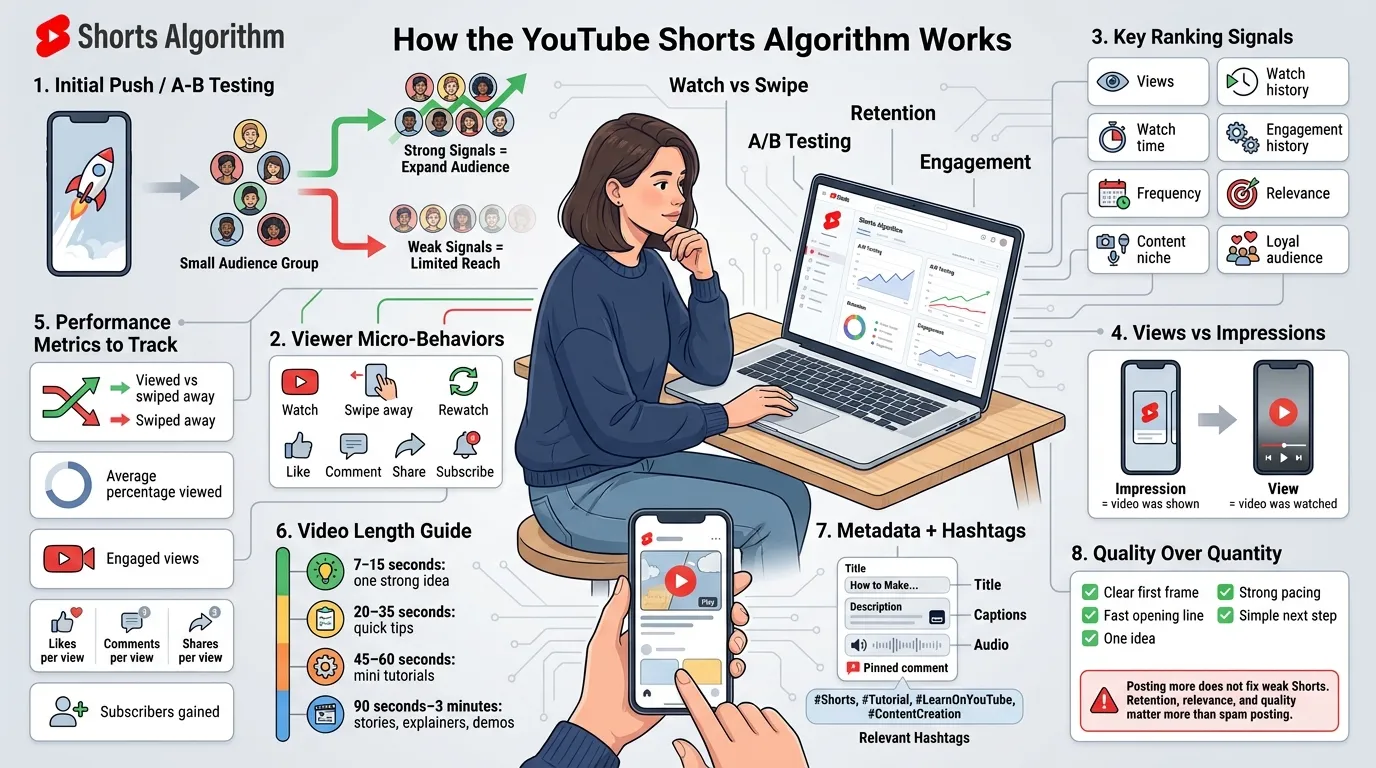
YouTube shorts algorithm functions by A/B testing every Short with audiences and analysing their interaction manors to determine if the Short should be recommended to more like-minded audience members. In essence, the system would aim to anticipate the micro-behaviors that viewers exhibit like watch, swiping/rewatch, like, comment, share, or subscribe.
Signals like watch history, search history, channel subscriptions and likes are used to personalize recommendations by YouTube’s recommendation system.
Key Ranking Signals
The viewer actions and video qualities that signal to YouTube if a Short is worth expanding its reach.
Views
With every playback, the number of views will increase as well. Successful doesn’t always equal views. If viewers skip viewing or get bored halfway through a Short, a lot of bad views can take them off of the growth.
YouTube has updated the way Shorts are measured to enable creators to view ‘engaged views’ in YouTube Analytics.
Watch History and Watch Time
When users watch history on YouTube, it contributes towards recommendations, since it can be used to suggest relevant content to the wearer. Watch Time refers to a measure of the duration viewers spend watching a content piece.
The reason is that a Short with a high with Watertime retention is stronger than a Short with quick drop-offs. A 20 second Short watched for 19 seconds is a stronger signal than is a 60 second Short watched for 8 seconds.
Engagement History
Engagement history refers to likes, comments, shares, subscriptions and duplicate interactions with similar content. YouTube has said that the way it determines satisfaction is by measuring likes, dislikes, number of times viewers have shared a video, views, and surveys that can gauge satisfaction.
A well-engaged system will allow you to link your Short to viewers.
Frequency
Frequency refers to the number of interactions viewers make with the creators content, as well as the frequency of the creators posting. Frequent posts may be advantageous testing, poor quality may not.
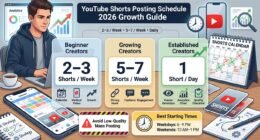
Many creators find 3–7 Shorts per week to be a beneficial posting checklist. If the quality remains high, then more will work.
Relevance
Relevance is when the Short is what viewers want at the moment. YouTube considers user behaviors, topic signals, user’s watch history, and user’s search behaviors.
YouTube can analyze relevance in the hashtag, metadata, captions, audio, title words, and viewers’ response.
Content Niche
Content Niche aids YouTube categorize the Short right into the proper viewer cluster. When it is clearly indicated, recommending is easier.
Some noticeable and convincing examples of Shorts niche include:
- Business owners – AI Agents.
- For Google Ads users, here are some PMax and Smart Bidding tips!
- Local Marketing advice for CMO’s.
- Podcast clips for sales teams from Endless Customers.
- Colorado State University (CSU) Campus Hints to the Student.
Loyal Audience
If you have a loyal audience, YouTube will be able to know whether you are a channel fit. Repeat watchers, comments and subscription can be used for early sharing.
Subscriber vs non-subscriber weighting is important as a Short can initially show up to those that have interacted with like videos and also show up to other non-subscribers.
The Role of Thumbnails and Titles
Clickable titles thumbnails are more critical in the search, channel, and recommendation pages outside of full-screen Shorts feed. The first frame in the Shorts feed is a “thumbnail.
Use a title which will describe the value:
Good title: “3 Google Ads Smart Bidding Mistakes”
Weak title – “You can’t believe this.”
Thumbnail Magic is Clear Face, Object, Result or Text frame when the Short is not in the swipe feed.
Views vs. Impressions
View and Impression are distinguished. An impression is a showing of the film. A view is a video watched or counted in terms of the view system at YouTube.
If you want to gauge the effectiveness of your Shorts, creators should keep in mind to measure more than just views—here are some other metrics to look at:
- Viewed vs. swiped away.
- Average percentage viewed.
- Engaged views.
- Likes per view.
- Comments per view.
- Shares per view.
- Subscribers gained.
Video Length
Length of the video will vary depending on the idea. The length of YouTube Shorts is up to 3 minutes, although less is sometimes sufficient for very quick hooks or tips.
Use this guide:
- 7-15 seconds of one solid thought!
- Quick tips are between 20-35 seconds long.
- Mini Tutorials: 45-60 seconds.
- Stories, explainers, product demos: 90 seconds to 3 minutes.
Post Frequency
Frequency of posts to amass data. YouTube Shorts algorithm doesn’t reward the spam by its self. When it comes to posting content consistently, only then can it be beneficial if the content being posted is of good quality, relevant and retained.
Gradually begin with 1 Short per day/day or 3-5 Shorts per week. Try 20 Shorts before shifting to an alternate strategy.
Hashtags and Metadata
Hashtags, metadata will aid YouTube in understanding the context of topics. Weak content won’t be saved by hashtags!
Include 2-4 appropriate hashtags:
- #YouTubeShorts
- #GoogleAds
- #AIContent
- #LocalMarketing
Optimizing Metadata involves optimizing title, description, hashtags, captions, audio, and pinned comment.
An Initial Push
An “initial push” is when YouTube shows a Short to a small group of people to test it out. From there, the fans need to give the Short a sign that it is past time for the game to get under way.
The most initial indications are:
- Displayed rather than swiped away.
- Strong retention.
- Rewatch value.
- Likes.
- Comments.
- Shares.
- New subscribers.
Quality Over Quantity
Quality over quantity is important because many bad Shorts can make the audience swipers. While it is important for a creator to post frequently and consistently, every Short should feature a solid opening, value and clean cuts.
Infact, Good shorts are complete with 5 qualities:
- Clear first frame.
- Fast opening line.
- One idea.
- Strong pacing.
- Simple next step.
YouTube Shorts Algorithm Updates
YouTube Shorts Algorithm Updates have centered on expanded-length Shorts, upgraded creator instruments, transparency in analytics, and estimating monetary aspects.
For videos shot in square or taller format, Shorts will be available from October 15, 2024. YouTube Help also indicates that creators can utilize engaged views in YouTube Analytics to make comparisons on performance with YouTube Shorts.
The creators should pay attention to three changes that are happening now:
- The longer the shorts the more in-depth the content.
- For performance analysis, engaged views are important.
- It’s not about how much you post, it’s about how you post.
YouTube Shorts Monetization
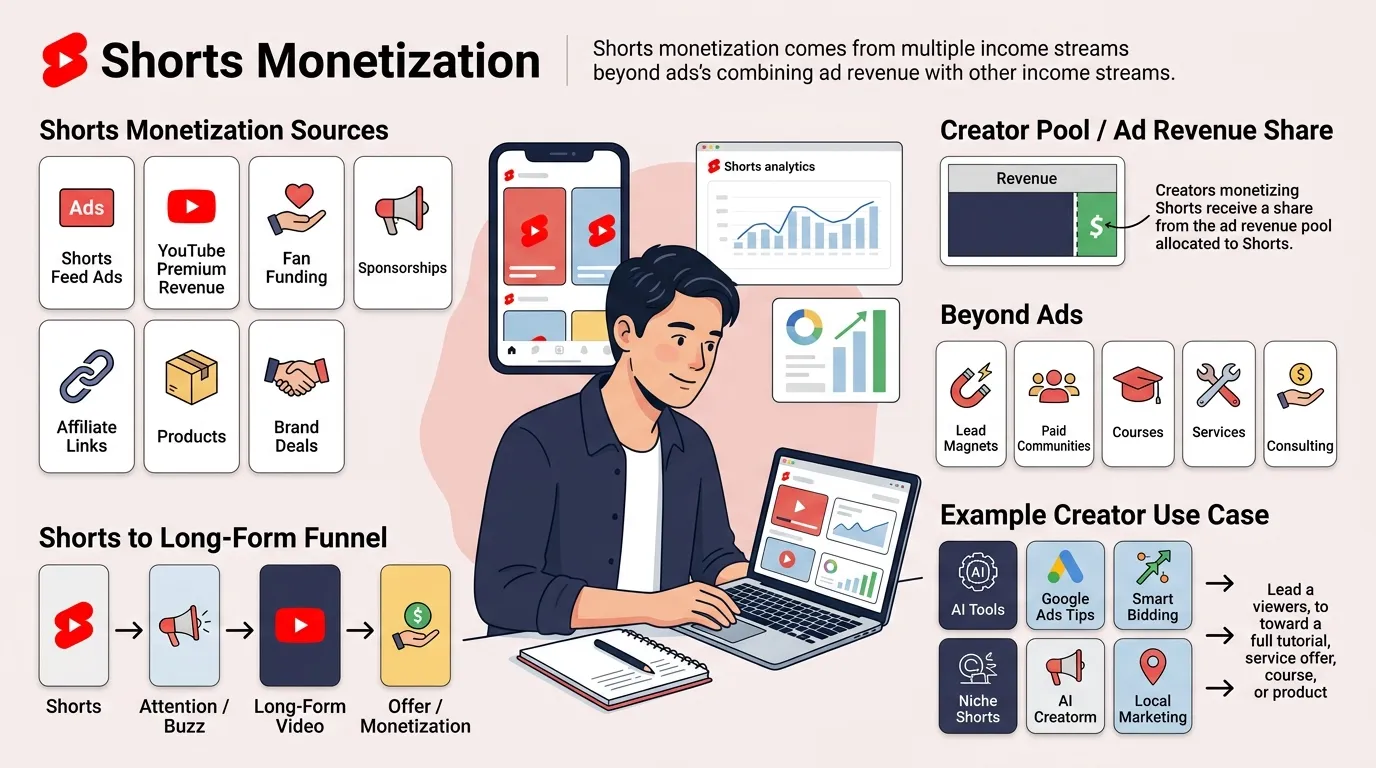
YouTube Shorts Monetization operates in a variety of ways, including Shorts Feed ads, YouTube Premium revenue, fan fundings, sponsorship, affiliation offers, products and brand deals.
According to YouTube, content makers who monetize their content get 45% of the money allocated for ads on their short videos in the Creator Pool.
Creators should typically have more than ads to monetize their content through shorts:
- Sponsorships.
- Affiliate links.
- Lead magnets.
- Paid communities.
- Courses.
- Services.
- Products.
- Consulting.
The creator, who posted AI Max, PMax, Smart Bidding, and Local Marketing Shorts can leverage Shorts to generate buzz and long-form videos to explain the offers.
Content Ideas for YouTube Shorts
Generate suitable ideas for the creation of YouTube Shorts must align with niche, need, behavior of the viewers.
Here are 20 Point Hills ideas to use:
- “3 common mistakes actors make using YouTube Shorts.”
- “One AI Content tool that saves time during the editing process.”
- “Hashtagging without overHashtagging.”
- “Viewed vs. swiped away explained.
- “those 2 seconds of your Short.”
- Google Ads PMax mistake to fix today.
- “Smart Bidding tip: in 30 seconds.”
- “Local Marketing tip for small businesses.”
- “This video metric is one that should be monitored by CMOs.”
- “How to use citations with AI: A guide for creators.”
- “Best lesson from ‘Endless Customers Podcast.
- Facebook vs LinkedIn video post tip.”
- “Instagram Reel to YouTube Short checklist.”
- “Content tip, like an Alec Chillingworth.”
- “Ross From Friends audiovisual trend illustration.”
- One minute, that’s the IMPACT marketing lesson.
- “Student content idea” from around the CSU.
- “Keystone Cohort update clip.”
- Silver Lining from a failed Short.”
- “FAQs Answered in 30 seconds”.
Tips to Optimize YouTube Shorts for the Algorithm
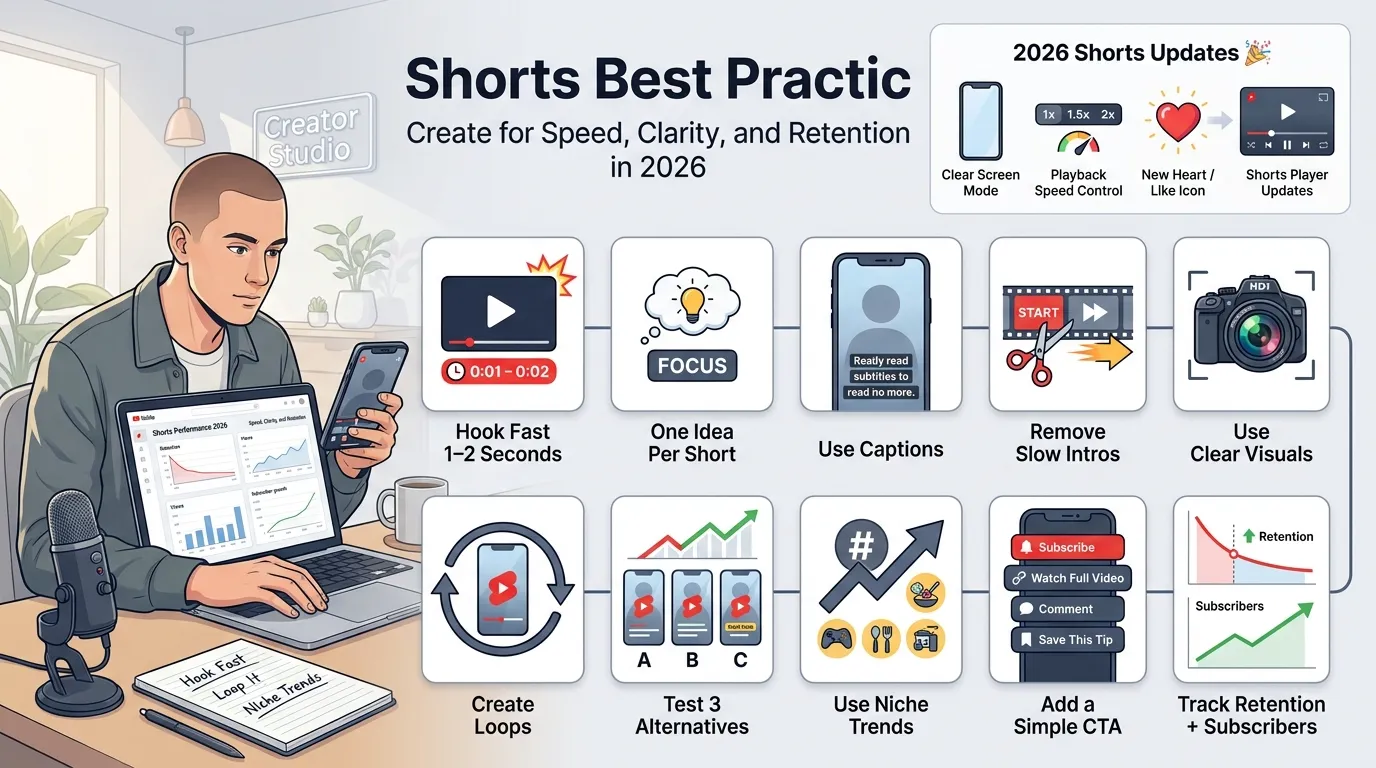
To make the most of YouTube Shorts: Refine the hook, retention, relevance, metadata, engagement and consistency in publishing.
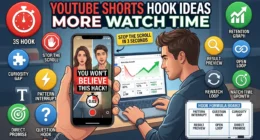
Hook Them Early
The beauty of hooking seconds is all viewers can swipe at once. Leave out the beginning, the problem or the surprise.
Good hook:
“It’s not hashtags that are the reason your short isn’t ‘failing’ – it’s because 60% of viewers swipe in 2 seconds.”
Capitalize on Trends
When the niche fits the trend, capitalize on it. Catching the trend might be helpful for discovery, but if it’s too far off topic, it will be confusing for the audience.
Use trends from:
- YouTube feed.
- Shorts audio.
- Google Trends.
- Instagram Reels.
- TikTok.
- Competitor channels.
- Industry news.
Don’t Oversell
No over-sales: people don’t buy what doesn’t seem authentic. A Short must provide value before a subscription, download or sale.
A soft version of the CTA is more effective:
If you create Shorts, “Save this.”
Find What Works for You
Find what works for you by studying Shorts analytics engagement. Don’t duplicate a virus creator without first testing your market.
Track:
- Topic.
- Hook.
- Length.
- Caption style.
- Audio.
- Posting time.
- Viewer response.
Create Good Content
Make good content where one true problem is solved. YouTube’s recommendation system is driven by viewer satisfaction—not just clikcs.
A helpful answer, a clear moment, or a solid re-watch rationale will be provided with every Good Short.
Reconsider Calls to Action
Shorts people tend to move around quickly, so rethink Calls to action. Have one CTA per Short.
Good CTAs include:
- “Comment ‘checklist’.”
- View the entire video.
- “Join in for some Quick & Dirty tips.”
- “Save this first before posting.”
Keep Up with Trending Content
Stay updated with trending materials by looking around the patterns each and every day on your niche. You should have a trend in line with content strategy and then post the content.
AI Agents, AI Max, PMax, Generative Engine Optimization, and Smart Bidding might be covered by a marketing channel if they are pertinent to the channel.
Sink the Hook Early
Sink the hook early – provide the main pay-off as soon as possible. Never insert a logo, lengthy greeting or slow introduction.
Better opening:
“Your Short has 1k views with no subscribers as it has CTA so late.”
Use SEO
SEO (Search Engine Optimization) in Shorts’ titles, descriptions and hashtags. Shorts can be displayed in search, suggested search results and channel pages.
Use phrases like:
- How the YouTube Shorts algorithm works.
- Shorts algorithm tips.
- The working principle of How Shorts algorithm.
- YouTube Shorts optimization.
- Tips for Shorts Watch Time.
Be Careful How You Repost
Beware of re-sharing TikTok, Instagram, Facebook or LinkedIn content. Eliminate watermarks, abide by copyright guidelines, and frame for YouTube.
Reposted material should also look authentic to YouTube Shorts.
Choose the Right Length for the Content Format
Select the appropriate text length of the content form. Avoid converting a 12-second idea to a 60 second one.
Use:
- Brief for humorous bits, short tips, and comments.
- Micro Level – medium length for mini tutorials.
- Longer Form for story, explainers and product walk throughs.
Publish at the Right Time
Post at the right times: Use YouTube Studio’s Zoomer to identify when your audience is at work and publish accordingly. Testing new posting with morning, evening and weekend.
Test for 2 weeks before block change is made.
Compare with Competitors
Analyse competitive products to gain insight into the demand for topics and packaging. Never duplicate titles, scripts, visuals.
Study:
- Opening line.
- Caption style.
- Video length.
- Comment questions.
- Audio usage.
- Repeated topics.
Optimize Video Metadata and Video Performance
Optimize Video Metadata and Video Performance hand-in-hand. Metadata are used by YouTube to understand the material. Performance indicates if people care or not on YouTube.
Improve:
- Title.
- Description.
- Hashtags.
- Captions.
- Audio.
- First frame.
- Retention.
- Engagement.
Post Frequently and Consistently
Has a habit of posting often and regularly to gather data. Consistency works well when the content remains on-topic.
Follow a basic routine:
- 5 Shorts per week.
- 1 topic cluster/Week.
- One per week analytics review.
- 1 improved version of an otherwise less successful concept.
Improve Video Quality and Maintain Editing for Trending Videos
Enhance the video by ensuring good audio, crisp imagery, legible captions and smooth cutting. Well-made video editing is still essential for trending videos.
Editing improvements include:
- Faster first frame.
- Animated Captions.
- Auto Subtitles.
- Jump cuts.
- Clear text.
- Strong ending loop.
Analyse Trends
Look at the trends: One way of analysing is by determining the trend: Is it rising, is it peaking or fading? An established trend, which has already been exhausting, can generate poor reach.
Look at:
- Search interest.
- Competitor posting.
- Shorts audio usage.
- Comment volume.
- Related keywords.
SEO in Shorts Description
SEO in Shorts Description aids YouTube and viewers in comprehending the video. Do not elaborate on the first sentence.
Example:
“Discover how viewed vs swiped away, watch time retention and engagement signals are utilized by the YouTube Shorts algorithm.”
Include 2-4 hashtags following the description.
Engage Audience to Interact with Your Shorts
Engage Audience to Interact with Your Shorts by asking simple questions.
Use:
- “Which hook is more successful?”
- “Do you want to test this out?”
- “What niche are you in?”
- “Put your problem of shorts in a comment.
- “Save this checklist.”
Work with Quality
Work with Quality by posting less quality Shorts but still many quality ones. While a poor quality Short can learn something from Analytics, many Shorts in this condition will ultimately be a waste of time.
Quality translates to obvious value, solid pacing, clean audio and sound retention.
Cross-Platform Promotion
Viewers are coming from Instagram, Facebook, LinkedIn, blogs, and newsletters and communities with Cross-Platform Promotion.
Use this flow:
- Publish YouTube Shorts.
- Create and post a teaser for Instagram.
- Publish a lesson on Linked In.
- Add the Short to a blog.
- Have the best Short delivered via an email list.
Collaboration with Creators
New Audiences with Creators’ Collaboration. Partner with people who make videos in the same niche or a similar niche.
Good collaboration ideas:
- Experiment with remixing each others clips that can be used.
- Share quick and professional advice.
- Clip podcast highlights.
- Respond to other characterizations.
- Post helpful Shorts on community posts.
Creative Thumbnails
Creative Thumbnails are important when Shorts are displayed on channel pages, on Search and Browse surfaces. Communicate clearly with readable text, clear faces, good contrast and clean subject.
First frame should be audible without audio.
Use AI Power While Editing
With AI Power While Editing, automate production but don’t outsmart strategy.
AI can help with:
- Auto Subtitles.
- Caption styling.
- Hook variations.
- Clip selection.
- Content summaries.
- Citations for research workflows with AI.
- Metadata embedding optimization.
Still there’s a place for people.
Try Remixes and Duets
Use Remixes and Duets where suitable for the original work. Remix can be used to participate in a discussion.
Use Remix for:
- Reactions.
- Education.
- Trend response.
- Music clips.
- Commentary.
Use Trending Sounds
When appropriate use Trending Sounds for the Short. Avoid using an unrelated sound just because it’s a popular one.
Be aware of copyright and monetization guidelines before developing a music strategy.
Timing Is Everything
There’s a time for when the trend is new, when a news topic is active, when the audience is online.
Utilize for posts ways to be quick with trending matters. Carefully post for evergreen content
Thumbnail Magic
Thumbnail Magic is knowing how to make your first vision clear enough so that a swipe is avoided. Watch with one Subject, one MESSAGE and one Visual one REASON.
Try to use screenshots with no clutter and no small text.
Clipping YouTube Videos
YouTube Videos can be turned into Shorts with Clipping. These are fantastic for Podcasts, webinars, tutorials, and interviews.
If there’s one clear idea per clip, a 45-minute Endless Customers Podcast can be enacted and available as 8-12 Shorts.
Experiment, Experiment, Experiment!
Try out Hooks, lengths, captions, topics, sounds and CTAs. Make one change at a time.
A testing plan that is easy to follow:
- Remove and make 3 hooks on the same subject.
- Publish across 3 days.
- Viewed vs. swipeaway.
- Check retention.
- Re-create winning version.
Should You Create a Separate Channel for YouTube Shorts?
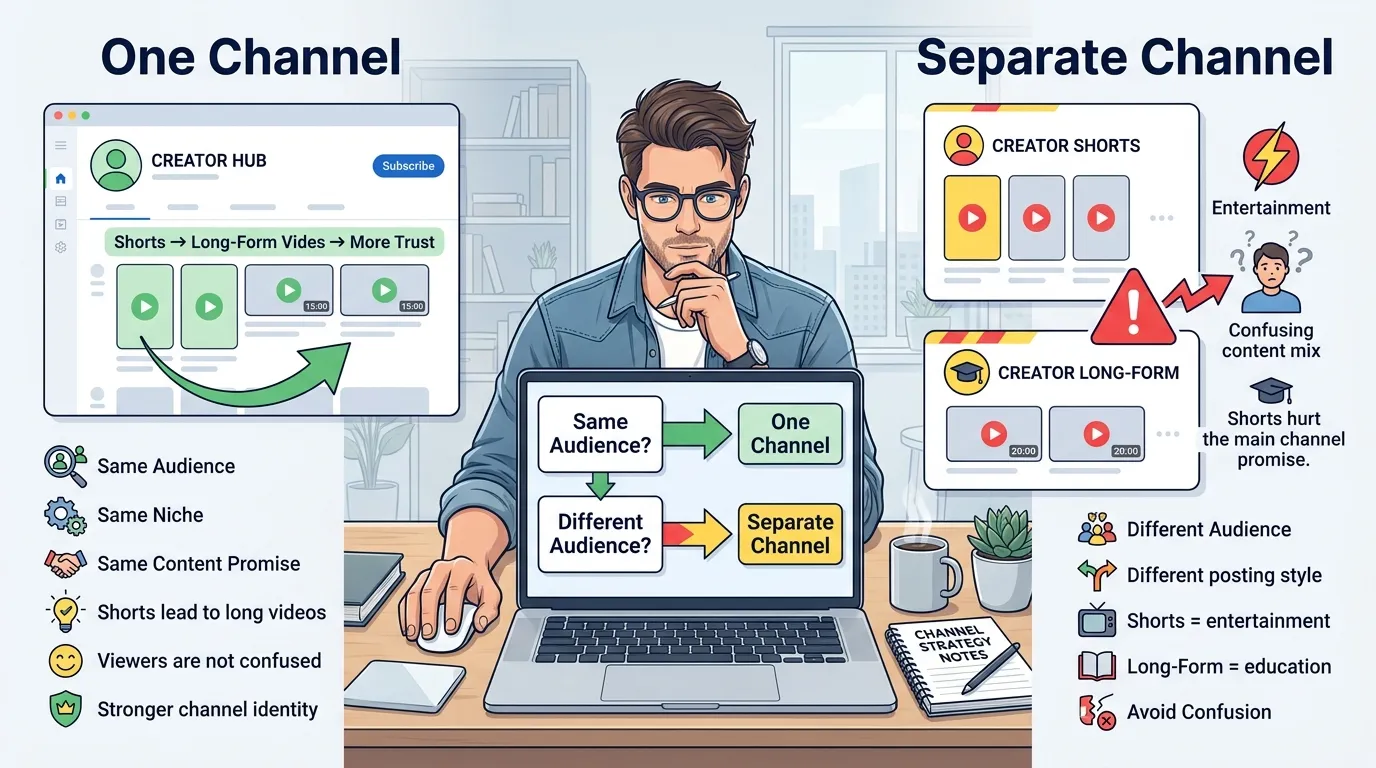
When the audience for YouTube Shorts differs from the audience for long-form videos, create a separate channel for YouTube Shorts. When it comes to Shorts, if they share the same niche, the same topic, and fulfill the same content promise, then they could be kept on the same channel.
Use one channel if:
- Shorts and long-form videos are the same people’s pleasure.
- Shorts guide viewers to longer videos.
- There is a wide channel niche.
- Subscribers do not get confused with shorts.
If you have to use a separate channel:
- Shorts = Entertainment and Long Form = Education.
- Some of them are different audiences.
- This is the posting style, and it’s extremely varied.
- The shorts negatively affect the channel’s content promise.
Mixing Long-Form and Short-Form Content
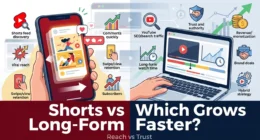
When Long-Form and Short-Form Content have a task it works! Shorts appeal to new viewers. Long Form videos establish trust and cover more complex topics.
Combine for the following week:
- 1 long-form video.
- 3-5 Shorts of that video.
- 1 community post.
- 1 analytics review.
- 1 improved version of the best Short.
This system allows creators to build a loyal following, watch time and reach indications.
Will YouTube Recommend More Long-Form Videos If People Watch My Shorts?
Yes, YouTube can suggest more long-form video content if viewers of the same channel or topic watch Shorts, but viewer interactions with Shorts do not indicate viewer interest of the longer-form content of the channel. The viewer is required to demonstrate behavior which is supportive of the recommendation.
To boost boosting possibilities in consumption of long-forms from Shorts:
- Maintain the same niche.
- Talk about the whole video.
- Link related videos.
- Use playlists.
- Keep the topic very similar.
- Steer clear of haphazard viral shorts.
The recommendations on YouTube are customised, and therefore as per the behaviour of the viewers, and not to push all the viewers of short-form content into long-form content.
How Many Shorts Do I Need to Upload Before the Algorithm Recommends My Content?
There is no set number of Shorts before the algorithm can recommend content. While finding patterns is seen in most of the creators’ data points might require the creation of 20 to 50 Shorts, a new channel can be reached from 1 strong Short.
As a learning sample use 30 Shorts:
- 10 discussions for topics through shorts.
- 10 New shorts, test hooks.
- 10 shorts to experiment with length, written captions, CTA and more.
It’s not all about get here. The focus is on learning what the people view and don’t swipe.
Challenges in YouTube Shorts Algorithm
The YouTube Shorts Algorithm sets forth 5 common creator challenges: YouTube video length confusion, music issues, fast video updates, viral-content myths, and a lack of consistency and quality.
Difficulties with Choosing Video Length
Deciding how long a video should be is a challenging task due to the fact that certain topics require longer videos. Ten seconds for a joke, 30 seconds for a tip and two minutes for a tutorial can be enough.
Choose the length due to the notion, not the algorithm myth.
Strikes for Music Usage
The problem with strikes for Music Usage is when creators incorrectly utilize a copyrighted sound. Utilize music tools on YouTube, original music, licensed music libraries (e.g., Epidemic Sound), or music with easy and clear rights.
But copyright safety is more important than retentions with music.
Quickly Changing Algorithms
Switching algorithms too frequently can throw creators off. Some analytics, formatting, monetization and recommendation surfaces on YouTube change over time.
The creators should concentrate on the reliable signals:
- Viewer satisfaction.
- Retention.
- Relevance.
- Originality.
- Consistency.
- Clear niche.
Only Viral Content = 100% Success
100% success is only achieved with viral content. Viral Shorts can generate views that are not loyal viewers.
Better goals include:
- Subscribers gained.
- Returning viewers.
- Input from target population.
- Long-form clicks.
- Product or email conversions.
Consistency of Content but Bad Quality
A bad consistency is not good for channel development. Daily substandard posts can educate viewers to swipe away.
If the quality is going down, a creator should post less.
The Future of YouTube Shorts
In the future, YouTube Shorts promises to become even more AI-driven for video editing, a greater emphasis on longer short-form storytelling, enhanced analytics and management capabilities, improved connectivity with long-form creations, and increased cross-platform workflows.
AI-Powered Content Creation
AI-Powered Content Creation will assist creators to edit faster, caption faster, clip faster and test more hook.
AI tools can help with:
- Script ideas.
- Captions.
- Auto Subtitles.
- Trend analysis.
- Clip selection.
- Thumbnail gaze heatmaps.
- Explain the meaning of sentiment velocity analysis.
- Metadata optimization.
Human judgment and original ideas are still required for creators.
Longer YouTube Shorts
The reason making longer YouTube Shorts are beneficial for creators is that they provide the room that creators need for telling stories and for YouTube tutorials, educating on product, and commenting. Shorts are supported on YouTube up to 3 minutes.
Longer Shorts are effective when it is indeed a topic that requires more time.
Cross-Platform Promotion
Creators post content on YouTube and across Instagram, Facebook, LinkedIn, blogs, newsletters, and communities – and so will Cross-Platform Promotion continue to grow.
There’s no single person that makes a good creator brand.
Summary
The algorithm of YouTube Shorts suggest videos depending on activities such as watching history, swipes, retention, likes, comments, shares, and viewer satisfaction. The elements of Strong Shorts are a strong hook, a niche that is clearly defined, good editing, useful metadata and posting regularly. The creators need to monitor the metrics showing the viewed vs. swiped away videos, watch time, audience retention and engagement on Shorts. When combined with long-form video, SEO, trending and cross-platform promotion, shorts can be a very effective tool.