
If you have ever posted something on Facebook and watched it disappear into the void with barely a handful of views, you have experienced the algorithm working against you. Understanding why that happens and what you can do about it is the difference between a page that quietly flatlines and one that steadily grows. Here is a thorough breakdown of how the Facebook algorithm actually works in 2026 and the practical strategies you can use to work with it instead of against it.
Table of Contents
ToggleWhat the Facebook Algorithm Actually Is?
The Facebook algorithm is not a single switch or a simple ranking formula. It is a complex, layered system of machine learning models that decides, for every single user, what content appears in their feed, in what order, and how prominently. Its fundamental job is to keep people on the platform for as long as possible by showing them content they are most likely to engage with meaningfully.
Facebook processes billions of signals every day to make these decisions. Every like, comment, share, save, click, watch time, and even the act of hovering over a post feeds data back into the system. The algorithm is not trying to punish small creators or favor big advertisers in the organic feed. It is simply trying to predict which content each individual user will find valuable enough to stop scrolling for.
Understanding this core purpose is the foundation of everything else. When you create content that genuinely earns attention and interaction, you are telling the algorithm exactly what it wants to hear.
What the Facebook Algorithm Actually Is?
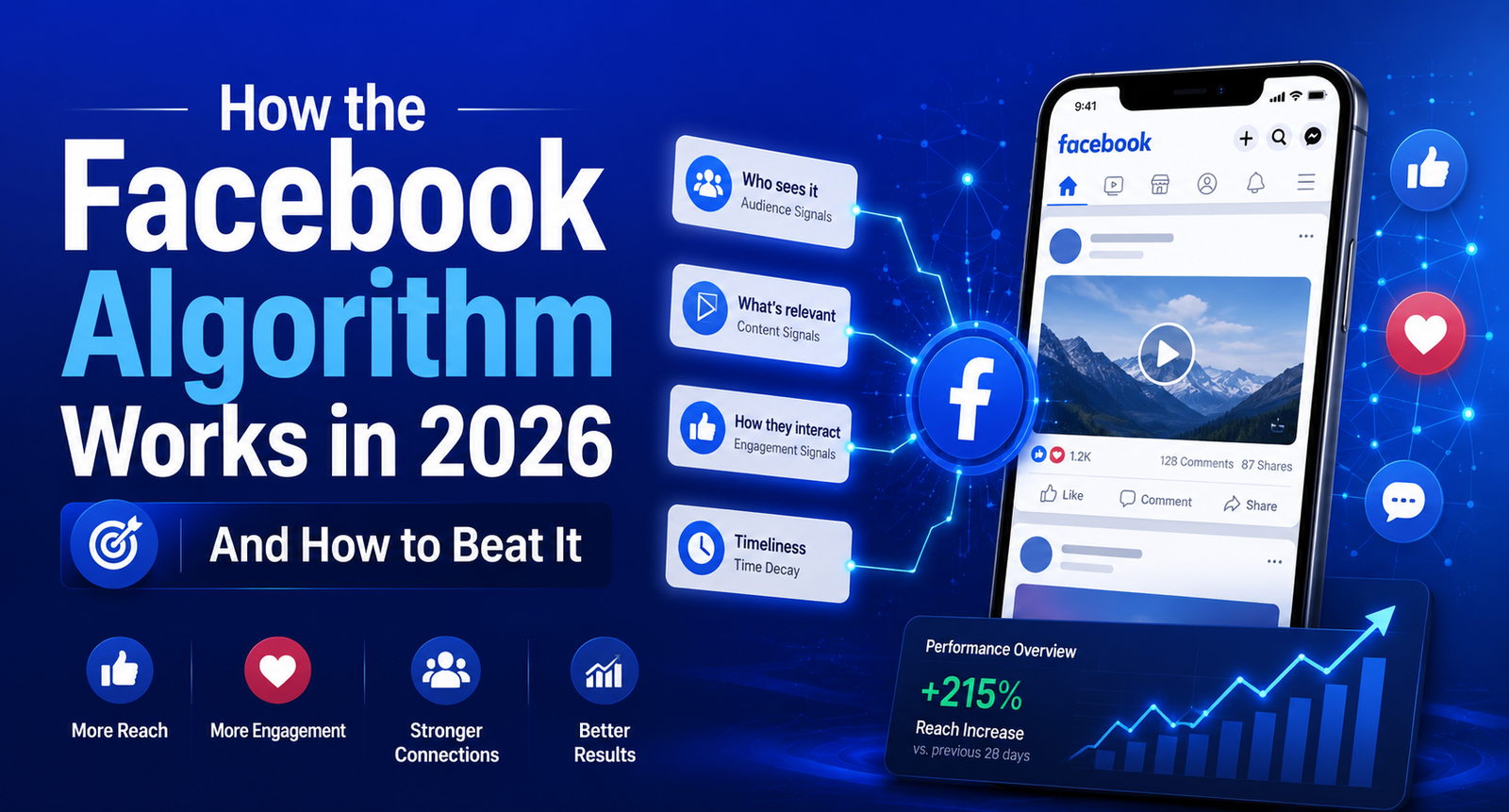
Facebook’s ranking system weighs four primary categories of signals when deciding whether to show your content to more people.
The first is inventory, which simply refers to all the posts available to show a given user at any moment, drawn from their friends, groups, followed pages, and suggested content. You are always competing within this pool.
The second is signals, the actual data points the algorithm collects about a piece of content. These include who created it, how recently it was posted, what format it uses, how fast it is accumulating engagement, and how long people are spending with it. Early engagement velocity matters enormously here. A post that gets strong interaction in the first thirty to sixty minutes after publishing gets pushed to a wider audience. A post that sits quietly gets buried.
The third is predictions, where the algorithm uses your personal history to guess how likely you are to interact with a given post. If you regularly comment on video posts from small businesses, Facebook will show you more of those. It is building an individual preference profile for every user on the platform.
The fourth is relevance scores, a final calculation that weighs predicted value against potential negative signals like people choosing to hide the post, unfollow the page, or report it as spam. Content that drives people away gets suppressed even if it initially attracted attention.