Key Takeaways
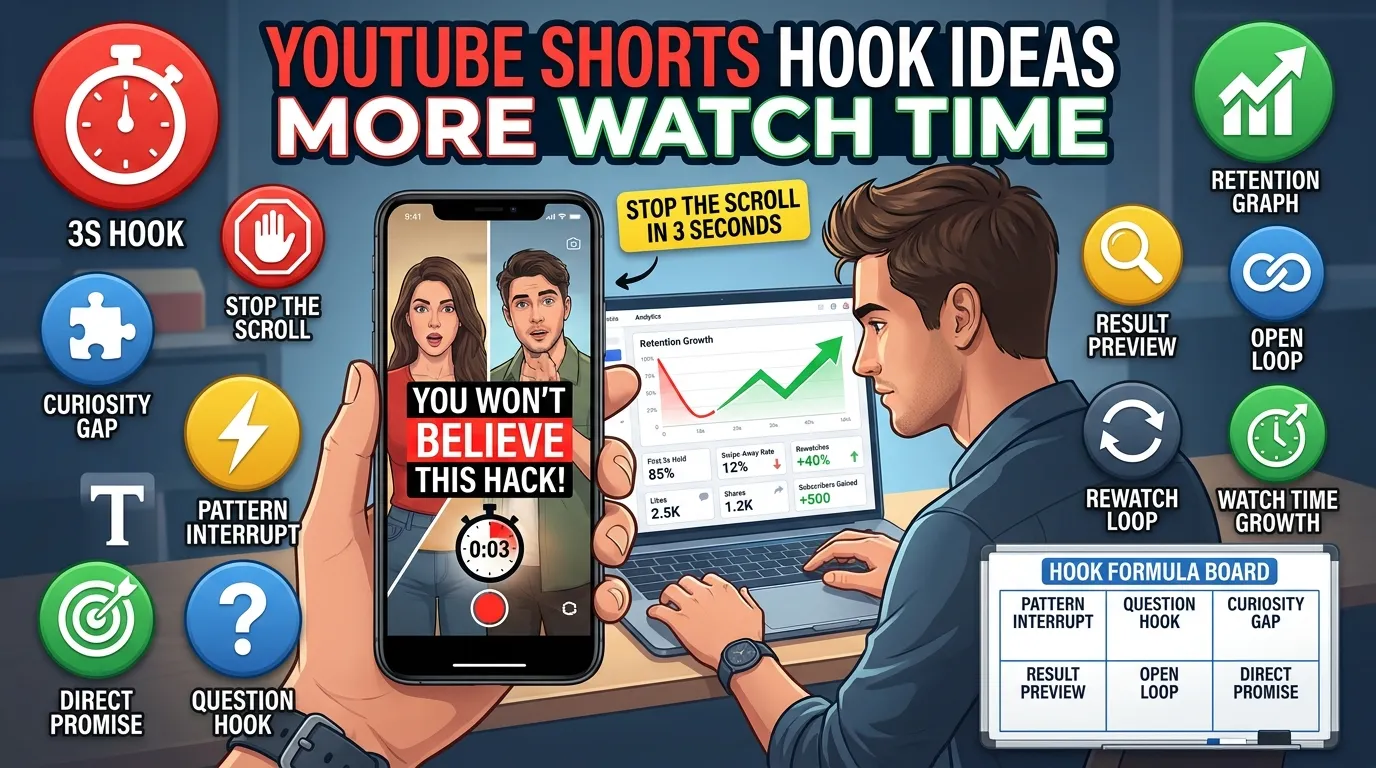
- To prevent the scroll before 3 seconds, YouTube Shorts hook ideas inspire creators with suggestions for more viewing time.
- The top YouTube Shorts hooks are based on one or more of the following: curiosity, value, emotion, proof, or a visual pattern interrupt.
- In 2026, pattern interrupt hooks, direct promise hooks, question hooks, curiosity gap hooks, result preview hooks, and open loop hooks can be used.
- Suggested best practices for YouTube Shorts include short first lines, moving or quick text overlays, honest promises, and clear payoff.
- The type and format of the hook depends on the niche, viewer intent, and the retention goal.
- While AI can automate the process of creating and testing hooks, human editing ensures that hooks remain clear and authentic.
- The trick is that the hook has to be as good as the hype. Clickbait undermines trust and diminishes long-term growth.
Intro
The key to more watch time for YouTube Shorts is to make viewers take action, pause, think, ask a question, or respond to a visual spark. Curiosity, value, emotion, and payoff are the best ingredients to make a hook for YouTube Shorts.
YouTube Shorts, TikTok and Instagram Reels battle it out for quick engagement in 2026. A poor opening will cost you viewers before they understand the content that is to follow. A good hook works better in the first 3 seconds, helps viewers stay for a longer time, improves viewer retention and helps YouTube see viewer interest.
Why Hooks Matter More Than Ever
Hooks are more important than ever as viewers of YouTube Shorts make up their minds fast. A viewer can swipe away in less than one second. The first line, first visual, text overlay, sound, or movement at the beginning of the Short must inform the viewer why the Short is worth watching.
There are 5 things a good hook does:
- Stops the scroll.
- Creates curiosity.
- States a definite outcome.
- Corresponds to the video topic.
- Holds viewers’ attention until payoff.
The YouTube Algorithm considers viewer behaviour and signals of personalization to assess Shorts. YouTube suggestions include watch history, searches, subscriptions, and likes. This translates to a powerful hook that helps the Short get tested to the right audience and gets viewers engaged.
The Psychology Behind Effective YouTube Hooks for Shorts
When viewers feel a reason to care within the first few seconds, they will continue to watch the content. This is all about human psychology.
The 6 key psychological triggers that create powerful hooks are:
- Curiosity: “What happens next?”
- Self-interest: “This can benefit me.”
- Fear of loss: “I’m probably doing it wrong.”
- Surprise: “I didn’t expect that.”
- Identity: “This is for someone like me.”
- Proof: “Other people are achieving this.”
A good hook is not misleading to the viewer. A good hook sets up a clear reason to keep watching and then delivers the promise.
What Hook Formulas Work Best for YouTube Shorts?
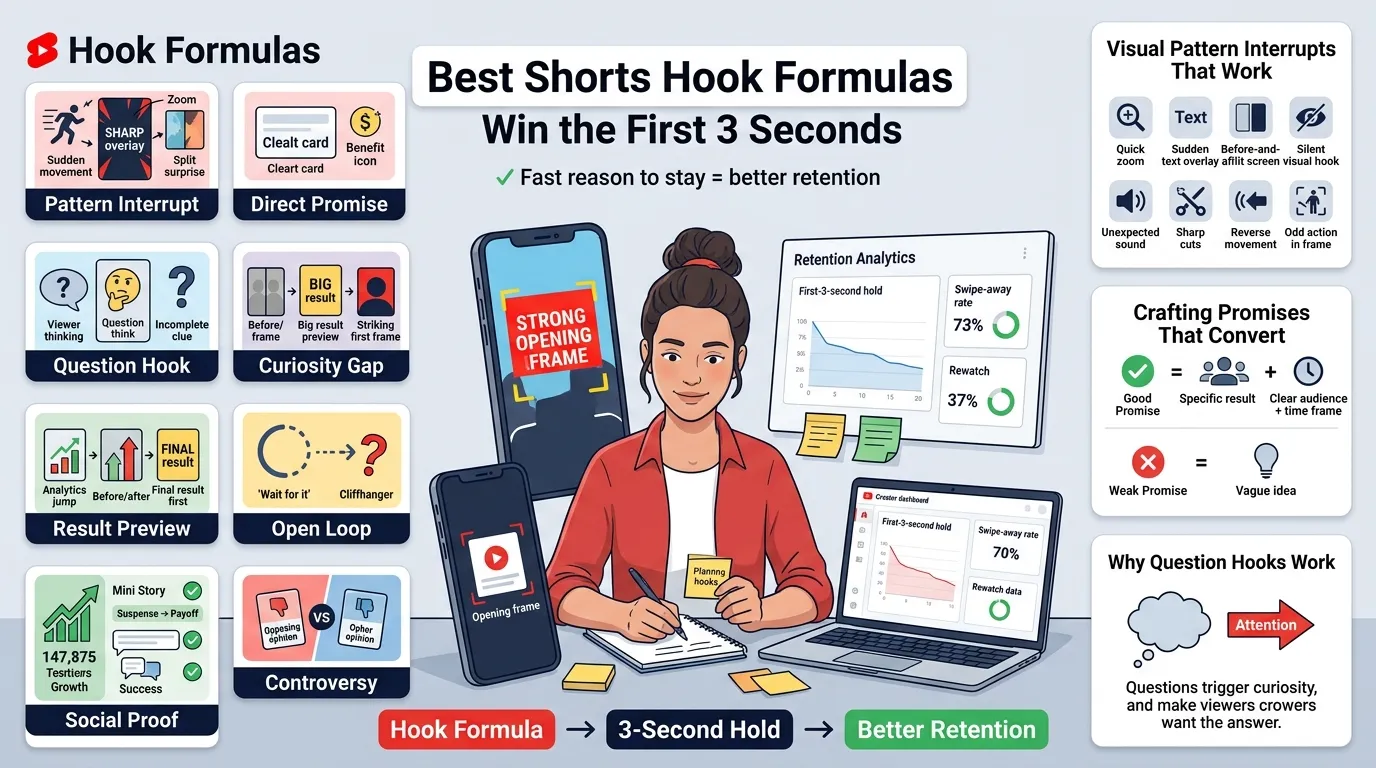
Pattern interrupt, direct promise, question hook, curiosity gap, visual hook, bold statement, result preview, open loop, story tease, direct value promise, social proof, and controversy are some of the best YouTube Shorts hook formulas.
These YouTube Shorts formulas that result in a 3-second hold work because each one gives the viewer a fast reason to stay.
The Pattern Interrupt Formula
The Pattern Interrupt Formula disrupts the viewer’s scroll flow with an unexpected action, sound, movement or statement.
Examples:
- “Stop using this YouTube Shorts trick.”
- “This seems like it shouldn’t work, but it does.”
- “Pause before you post your next Short.”
- “Nobody checks this before uploading.”
- “This one thing doubled my retention.”
Pattern interrupt hooks are ideal for saturated topics since they stand out with a different start from other videos in the niche.
Visual Pattern Interrupts That Work
Visual pattern interrupts work when the first frame gets immediate attention.
These are 8 visual pattern interrupts to use:
- Quick zoom into a result.
- Sudden text overlay.
- Before-and-after split screen.
- Silent visual hooks.
- Unexpected sound design.
- Pattern interrupt cuts.
- Reverse camera movement.
- An odd thing or action in the frame.
This is great for faceless storytelling channels, product videos, tutorial videos, or content made with budget-friendly smartphones.
The Direct Promise Formula
The Direct Promise Formula makes it clear to viewers what the outcome of the video will be.
Examples:
- “Here are 3 hooks to help grow watch time.”
- “Keep viewers engaged through this format.”
- “This script construction boosts the retention of Shorts.”
- “Copy this 10-second start for your next Short.”
- “This is the quickest method of testing Shorts hooks.”
This formula is effective because the viewer can see immediately what the gain is.
Crafting Promises That Convert
Crafting promises that convert must include a clear result, a clear audience and a clear time frame.
Good promise hook:
“Use this 5-second hook to increase Shorts retention.”
Weak promise hook:
“Some suggestions for YouTube.”
A potent promise hook features one specific benefit, like boosted watch duration, enhanced retention, increased engagement, stronger YouTube SEO, or faster testing.
The Question Hook Formula
The Question Hook Formula begins by asking a question that the viewer is interested in learning the answer to.
Examples:
- “Why are your Shorts getting views but no subscribers?”
- “Are you publishing Shorts at the wrong time?”
- “What makes people swipe away in 2 seconds?”
- “Does your Short get viewers to drop off before the point?”
- “Question hook vs result preview: which is better?”
Questions work since viewers’ minds always look for answers.
The Power of Self-Identifying Questions
Self-identifying questions are successful because the viewer feels like the content is talking to them personally.
Examples:
- “Are you an aspiring creator with fewer than 1,000 views?”
- “Do your Shorts get views, but no watch time?”
- “Do you post every day but still see no growth?”
- “Are you creating tutorials that people skip?”
- “Do you have hooks that sound similar to everyone else?”
These hooks attract the right audience by helping viewers identify themselves before the content begins.
The Curiosity Gap Hook
The Curiosity Gap Hook provides sufficient detail to arouse curiosity, but not enough to complete the thought.
Examples:
- “The thing that makes your Shorts fail is not what you might think.”
- “This little adjustment changed my retention curve.”
- “When I tried 5 hooks, one destroyed the rest.”
- “The best hook was the one I almost deleted.”
- “That is why your intro is costing you views.”
The payoff from a curiosity gap approach should follow rapidly.
The Contrarian Hook
The Contrarian Hook attacks or challenges a prevailing opinion.
Examples:
- “You don’t always have to post a lot of Shorts.”
- “Don’t say ‘watch till the end.’”
- “Your best hook might be your quietest beginning.”
- “Trends are not the reason your Shorts grow.”
- “A shorter Short can lose more viewers than a longer one.”
People want to see whether the statement is correct, and this makes the contrarian hook work.
The Visual Hook: Show, Don’t Just Tell
The Visual Hook starts with a visible result, action, error, or change.
Examples:
- Present the final product edit before the tutorial.
- Display the product result before the product information.
- Show the mistake before explaining how to fix it.
- Display the analytics graph before the strategy.
- Display the completed design before showing the steps.
Creators who utilize AI Video Tools, OpusClip, OPUS, Magnum Opus, YouTube Shorts Hook Generator tools, and other workflows will find a visual hook effective.
The Bold Statement
A Bold Statement Hook is a declaration that viewers want explained.
Examples:
- “This is the quickest way to lose Shorts viewers.”
- “Most YouTube Shorts hooks are too slow.”
- “Your first sentence is killing your watch time.”
- “This hook is far more effective than ‘stop scrolling.’”
- “Creators are wasting the first three seconds.”
The bold statement should be specific and able to be proven within the video.
The Result Preview
A Result Preview Hook previews or indicates the final result first.
Examples:
- “This Short performed 3x better after one hook adjustment.”
- “This is the final edit before I show the steps.”
- “This is the hook that did better than the other 4.”
- “This before-and-after intro fixed my drop-off.”
- “This 3-second opener got viewers hooked.”
Result preview hooks work because the viewer sees the reason to continue.
The Open Loop
The Open Loop Hook starts a thought at the beginning of the Short that is completed later.
Examples:
- “There are 3 reasons this hook works, but the third one matters most.”
- “I changed one word in this hook, and the result was weird.”
- “This Short failed until I shifted the payoff earlier.”
- “The challenge isn’t the hook, the challenge is after the hook.”
- “Most creators miss the second retention drop.”
Open loop hooks work when the ending clearly closes the loop.
The Story Tease
A Story Tease Hook introduces a short story but does not reveal the ending.
Examples:
- “I made the same Short with 3 different hooks.”
- “I tried a silent hook for 7 days.”
- “This channel had zero views, then one hook changed the data.”
- “I used my best TikTok hook on YouTube Shorts.”
- “I tested Google SEO style titles for Shorts.”
Story tease hooks are suitable for experiments, creator journeys, product testing and abandoned channels.
The Direct Value Promise
The Direct Value Promise makes it clear to the viewer what value the video offers.
Examples:
- “Here are 5 YouTube Shorts hooks you can copy today.”
- “Use this checklist before recording your next Short.”
- “Here are 3 tips for staying in the Shorts feed.”
- “Save these viral hooks for YouTube Shorts.”
- “Here is a hook formula for more views.”
The best niches for direct value hooks include education, tutorials, YouTube SEO, Google SEO, and creator advice.
The Social Proof
The Social Proof Hook cites statistics, numbers, or people.
Examples:
- “This hook received more comments than my previous 10 Shorts.”
- “Creators use this hook to gain watch time.”
- “This format works in many viral YouTube Shorts.”
- “This opening kept viewers past the first three seconds.”
- “I tested this on a dead channel.”
Social proof should be genuine. Fake numbers can hurt reputation.
The Controversy
The Controversy Hook is an opinion or controversial idea.
Examples:
- “Don’t copy TikTok hooks for YouTube Shorts.”
- “Instagram Reels hooks don’t always work on YouTube.”
- “Posting every single day is not a growth strategy by itself.”
- “The majority of hook generators produce weak openers.”
- “‘Watch till the end’ is a cliché.”
Controversy is effective when the video provides helpful reasoning instead of empty drama.
50+ Viral YouTube Shorts Hook Examples for Rapid Channel Growth
Here are viral YouTube Shorts hook ideas for quick channel-building, increased view counts, and testing of ideas.
YouTube Shorts viral hook examples:
- “Don’t scroll if you post YouTube Shorts.”
- “This is why your Shorts lose viewers.”
- “Utilize this hook before your next upload.”
- “Nobody tells new creators this.”
- “One error kills watch time.”
- “Here are 3 hooks that work in 2026.”
- “You need this in your first 3 seconds.”
- “I tested this hook so you don’t have to.”
- “This is a hook that can be used by faceless channels.”
- “Try this if your Shorts are stuck.”
- “This will be the quickest hook fix.”
- “Most creators are just taking it too slowly.”
- “Do this before cutting the opening.”
- “This hook works for overdone topics.”
- “This is the negative hook formula.”
- “No voiceover needed for this visual hook.”
- “Your text overlay is too late.”
- “Here is a hook that flipped my retention curve.”
- “This is how to get people to keep watching.”
- “The first frame is more important than you imagine.”
- “This hook works during algorithm testing phases.”
- “Only for abandoned channels.”
- “I attempted reverse psychology hooks.”
- “The best hook does not have to be loud.”
- “Use this during Golden Hour filming.”
- “This works with unexpected sound design.”
- “This hook works after engagement spikes.”
- “Here is a technique for zero-search-volume niches.”
- “This hook works for niche hobby communities.”
- “Your Short needs a payoff sooner.”
- “This is the hook I would use today.”
- “This opening resolves tutorial kill zones.”
- “I asked Google for hook ideas.”
- “This is what most Shorts don’t get.”
- “A quick and easy trick for better watch time.”
- “The hook is good, but the script is poor.”
- “Here are 5 video hooks that drive 10x more views.”
- “This is the specific outcome hook.”
- “This is the curiosity gap hook.”
- “This is the bold statement hook.”
- “This is the result preview hook.”
- “This is the open loop hook.”
- “This is the irresistible question hook.”
- “This is the pattern interrupt hook.”
- “This is the visual hook.”
- “The first sentence should not give too much information.”
- “Here’s how to check hooks using Artificial Intelligence.”
- “Here are tips on hooking your way to a larger YouTube audience.”
- “Your CTA is too early.”
- “The Golden Rule: do what you said.”
- “Transform your videos with AI, but fix the hook first.”
- “This hook happens before the content promise.”
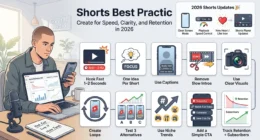
YouTube Shorts Hook Best Practices:
- Keep the first sentence under 8 words if possible.
- Show movement in the first second.
- Provide text overlay before the first 3 seconds.
- Match the hook with the payoff.
- Remove slow greetings.
- Avoid vague promises.
- Use one key idea per Short.
- Test 3 hooks on the same topic.
- Keep the first visual clear.
- Be genuinely interesting, not clickbait.
18 Viral Hooks for YouTube Shorts That Stop the Scroll in 2026
These are the 18 viral hooks for YouTube Shorts that help stop the scroll in 2026.
1. “Have You Heard About..?”
Use this hook for news, trends, tools and updates.
Example: “Have you heard about the new YouTube Shorts format?”
2. “They Don’t Want You to Know This Secret…”
Use this hook for tips, hidden settings or ignored strategies.
Example: “They don’t want you to know this Shorts retention trick.”
3. “You’ve Never Seen Anything Like This…”
Use this hook for transformations, product demos, edits and odd visuals.
Example: “You’ve never witnessed a Shorts hook test like this.”
4. “I Never Do THIS, and Here’s Why…”
This hook can be used for contrarian advice.
Example: “I never start my Shorts with ‘hey guys,’ and here’s why.”
5. “This Is the Best Product I’ve Ever Used…”
Use this hook for reviews, Amazon products, affiliate material and demos.
Example: “This is the best AI tool I’ve used for Shorts ideas.”
6. “I Was ‘Today Years Old’ When I Found This Out…”
Use this hook for unusual and unexpected facts.
Example: “I was today years old when I learned this Shorts mistake.”
7. “Questions I Get Asked a Lot…”
This hook is for expert answers and community content.
Example: “Questions I get asked a lot: how many hooks should I test?”
8. “I Asked Google…”
Use this for researching video content, search intent, and Google SEO content.
Example: “I asked Google what makes a good hook for a YouTube video.”
9. “Three Things I Do Before…”
Use this hook for checklists.
Example: “Three things I do before posting a YouTube Short.”
10. “Try This to [Accomplish Goal]…”
Use this hook directly for value.
Example: “Try this to extend watch time on Shorts.”
11. “Did You Know That..?”
Use this hook for education and quick facts.
Example: “Did you know your first frame can influence retention?”
12. “X vs. Y…”
Use this hook for comparisons.
Example: “Question hook vs result preview hook.”
13. “How to Create…”
Use this hook for tutorial purposes.
Example: “How to create a YouTube Shorts hook in 30 seconds.”
14. “I’m Trying This So You Don’t Have To…”
Use this hook for experiments.
Example: “I’m trying this Shorts hook so you don’t have to.”
15. “The Top 3 [Items/Ideas]…”
Use this hook for list content.
Example: “The top 3 hooks for faceless Shorts channels.”
16. “How to Become a…”
Use this hook for skill-building content.
Example: “How to become a better Shorts creator.”
17. “How to Have the Best [Activity/Idea] of Your Life…”
Use this hook for lifestyle or experience topics.
Example: “How to have the best filming session of your week.”
18. “A Simple Hack to…”
Use this fast-fix hook.
Example: “A simple hack to improve Shorts retention.”
10 Retention-First Openers You Can Reuse
When you need quick and easy hook ideas for Shorts, here are 10 retention-first openers:
- “This mistake costs creators watch time.”
- “Use this before recording.”
- “First, let me show you the outcome.”
- “One word makes this hook work.”
- “Your first 3 seconds need a reset.”
- “I tested this on a brand new Short.”
- “This format keeps viewers watching.”
- “Stop starting your Shorts this way.”
- “Here is the quickest intro repair.”
- “This hook is simple and effective.”
Why YouTube Shorts Hook Ideas Fail in Practice
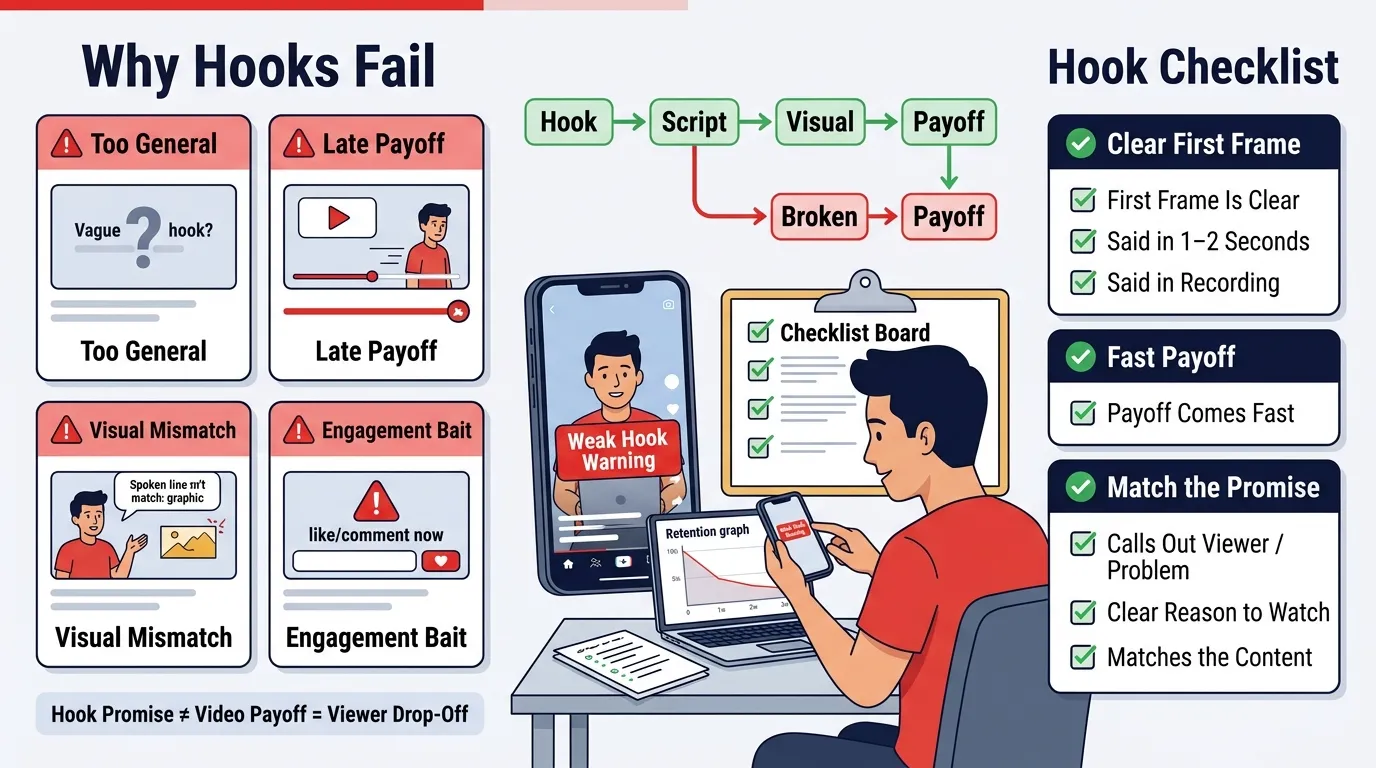
YouTube Shorts hook ideas don’t work because of the mismatch between the hook and the video. The promise is provided by a hook. The script has to make good on its promise quickly.
Here are the 5 reasons hooks go bad:
- The hook is too general.
- The payoff comes too late.
- The intro is the same as the title.
- Visually, the line does not correspond to the visual.
- The creator implements engagement bait.
Hook Selection Checklist Before Recording
Consider the following checklist before recording:
- The hook calls out the viewer or problem.
- The hook has a good reason to view.
- The hook is appropriate to the content.
- The hook can be said in 1–2 seconds.
- The first frame of the hook is clearly visible.
- There is payoff before the audience can lose interest.
From Hook to Script Without Losing Momentum
Using the payoff as a starting point, the hook can be converted to a script. Next, write 2–4 short points that help support the payoff. Conduct a precise ending.
Simple structure:
Hook → proof → steps → payoff → call to action.
Common Mistakes That Reduce Shorts Retention
Common mistakes that reduce Shorts retention include slow greetings, poor visuals, fuzzy topics, late payoff, long pauses, and fake curiosity.
15 Must-Try Hook Ideas To Skyrocket Your Video Views
1. “Watch till the end!”
Use this carefully. This term is used too frequently. Provide a motivation to stay.
Improved version: “Watch the last step before you post.”
2. “I need your help…”
You can use this for polls, comments, opinions and community decisions.
Example: “I need your assistance on picking the best hook.”
3. “I’ve got a secret”
Use this for hidden features, private workflows and creator lessons.
Example: “I have a secret for better-performance Shorts scripting.”
4. “This one is for ___”
Use this to target a particular audience.
Example: “This one is for creators stuck under 500 views.”
5. “Quick Reminder!”
Use this as a motivational tool and for quick corrections.
Example: “Quick reminder, your hook needs a payoff.”
6. “Did you know that…”
Use this for facts, stats and education.
Example: “Did you know Shorts can now be up to 3 minutes?”
7. “Hear me out…”
Use this for contrarian points.
Example: “Hear me out: posting less can improve quality.”
8. “Stop scrolling!”
Only use this when the next line gives obvious value.
Example: “Stop scrolling if your Shorts get views but no subscribers.”
9. “If you want to achieve_____ Listen up!”
Use this for goal-based content.
Example: “If you’re looking for more watch time, listen up.”
10. “You need to watch this if you struggle with______”
This is for targeting the pain point.
Example: “You need to watch this if you struggle with Shorts retention.”
11. “This tip will blow your mind…”
Apply this only when the tip is truly strong.
Example: “This tip will change how you write Shorts hooks.”
12. “You need to hear this!”
Use this for reminders and hard truths.
Example: “You must hear this: the hook is not the entire video.”
13. “I bet you didn’t know this!”
Use this for surprising facts.
Example: “I bet you didn’t know this about text overlays.”
14. “Why are there not more people talking about___”
Use this for underrated strategies.
Example: “Why are there not more people talking about silent visual hooks?”
15. “How to___ FOR FREE”
Make use of this for complimentary tools and workflows.
Example: “How to test Shorts hooks for free.”
9 Video Hook Examples That Actually Work and Why
1. Call out a common mistake
Example: “Your Shorts aren’t coming on quick enough.”
This is effective because the viewer doesn’t want to miss out on views.
2. State the pain point or problem
Example: “Your Shorts get views, but no subscribers.”
This will work because the viewer can identify the specific issue.
3. Start with a surprising fact
Example: “A short intro can still turn viewers off faster.”
This is effective because the assertion seems surprising.
4. Ask a question
Example: “Why do people leave before your main point?”
This is because the question creates a mental gap that needs to be filled with an answer.
5. Give an urgent warning
Example: “Fix this before you upload again.”
This works because urgency leads to increased attention.
6. Secrets and reveals
Example: “The hook you never use.”
This works because viewers are looking for hidden value.
7. Experiment style
Example: “I tried 3 hooks for this video.”
This works because experiments generate proof.
8. Pattern interrupt
Example: “This hook is ugly, but it works.”
This works because it violates expected content patterns.
9. Tease the outcome
Example: “This modification affected my retention graph.”
This works because viewers want the result.
What Makes Video Hooks Effective?
Good video hooks are attractive and intriguing, match the content, avoid clickbait, and are relatable.
1. It sparks curiosity
A hook creates curiosity and a desire to know the answer.
2. It doesn’t give away too much
A hook gives enough information to attract interest, but it does not spell out the full payoff of the video.
3. It’s not clickbait
When the video doesn’t meet the promise, it’s clickbait.
4. It’s relatable
When the viewer is able to see a real problem, goal, or feeling, then the hook is present.
How Does YouTube’s Algorithm Evaluate Shorts?
The YouTube algorithm looks at Shorts’ viewer behavior and customization. The platform considers the reactions of viewers to videos and connects videos with viewers that might enjoy similar content.
Important Shorts signals are:
- Watch behavior
- Swipes away
- Average view duration
- Rewatches
- Likes
- Comments
- Shares
- Subscriptions
- Websites visited and viewing history
- Viewer satisfaction
That simply translates to the fact that the hook is important because it influences initial viewer decisions. After the first 3 seconds with a strong hook, the full video must fulfill the promise.
How Hooks Compare Across Genres
Each type of genre requires a distinct hook.
- Direct value promises function well in education.
- Pattern interrupts work well with comedy.
- Product videos work well with result previews.
- Challenge hooks are great for fitness.
- Beauty is compatible with transformation hooks.
- Sudden moments are effective in gaming.
- News thrives on quick information.
- Finance works well with warning hooks.
- Open loops work well with storytelling.
- Identity hooks are good for motivation.
Optimizing Hooks for Different Niches
Hooks should be optimised for each niche to make sure they align with the viewer’s reason to watch.
For YouTube SEO and Google SEO content, use searchable hooks:
- “How to make a hook for YouTube Shorts.”
- “Best YouTube Shorts hooks for more watch time.”
- “YouTube Shorts hook ideas for beginners.”
For entertainment content, use emotional hooks:
- “This went wrong fast.”
- “It’s not how I’d hoped it would turn out.”
- “The final stretch really made the difference.”
For business content, use specific outcome hooks:
- “This one hook improved lead quality.”
- “This product demo hook has better click-through.”
- “Low-budget smartphones can use this opener.”
Seasonal and Trending Hook Adaptations
Seasonal and trending adaptations make it easier for creators to capture the interest of viewers.
Examples:
- “Best Shorts hooks for Ramadan content.”
- “Holiday product hooks that stop the scroll.”
- “New Year hooks for creators.”
- “Back-to-school Shorts hooks.”
- “Instagram Reels and YouTube Shorts summer travel ideas.”
It’s important to note that while trending hooks are good, they must still belong to the niche. Retention can drop as a result of a trend that does not align with the material.
How to Make a Hook for YouTube Shorts
When making a hook for YouTube Shorts, pick one viewer problem, one definite promise, and one rapid opening structure.
Follow this 5-step process:
- Pick the viewer.
- Pick the problem.
- Pick the result.
- Select the hook formula.
- Write the first line in 8 words or fewer.
Example:
Viewer: beginner creator
Problem: low retention
Result: faster first 3 seconds
Hook: “Your first 3 seconds need this.”
Step-by-Step: Implementing Hook Formulas in Your Shorts
In your Shorts, make use of this simple workflow to implement hook formulas:
- Write the video topic.
- Write 3 hooks on the same theme.
- Select the clearest hook.
- Record the first frame with movement.
- Place text overlay before 3 seconds.
- Deliver the promise quickly.
- Include a definite payoff.
- Review retention after posting.
- Test improved Shorts hooks with new versions.
This process is compatible with AI Video Tools, YouTube Shorts Hook Generator tools, OpusClip, Plann and manual scripting.
Advanced Hook Combinations That Multiply Engagement
Advanced hook combinations involve combining two types of hooks together.
Examples:
Pattern interrupt + direct promise:
“Don’t post anymore. Get this hook working first.”
Question hook + curiosity gap:
“Why did this Short fail after 2 seconds?”
Result preview + social proof:
“3x increased retention with this hook.”
Contrarian hook + direct value:
“Posting every day is not sufficient. Use this instead.”
Visual hook + open loop:
Show the end answer first, then show how to get there.
These hook combinations are more effective when the Short is well structured and has a rapid pace.
Timing and Pacing for Maximum Impact
Every second needs to have a job. That is timing and pacing for maximum impact.
Use this Shorts pacing structure:
- 0–1 second: visual hook
- 1–3 seconds: text or spoken hook
- 3–7 seconds: proof or setup
- 7–20 seconds: value, story, or joke
- Final seconds: payoff and simple call to action
This kind of arrangement reduces the chance that audiences feel the intro is dragging.
Common Hook Mistakes That Kill Retention
Here are some common hooking issues that cause loss of retention:
- Starting with “hey guys.”
- Using a slow intro.
- Asking for likes too soon.
- Making a vague promise.
- Hiding the topic.
- Using clickbait.
- Showing no visual change.
- Repeating the title.
- Taking forever to get to payoff.
- Stealing TikTok sounds without adjusting them for YouTube.
The Authenticity Balance
Authenticity balance is when the hook is strong but not fake sounding. A creator can use curiosity, urgency and bold statements without misleading the audience.
Good hook:
“Your first 3 seconds could be too slow.”
Fake hook:
“This secret guarantees viral growth.”
The Golden Rule: do what you say you will.
How to Test Different Hooks for Your Shorts
Run experiments to find out what type of hook works best on your Shorts by using the same topic and allowing only the beginning to vary.
Try out the following 5 types of hooks:
- Question hook
- Pattern interrupt hook
- Result preview hook
- Direct value promise
- Contrarian hook
Track these metrics:
- First 3-second hold
- Average view duration
- Swipe-away rate
- Rewatches
- Comments
- Subscribers gained
The topic, video length and posting time should be consistent for the test to work.
How to Test Hooks with AI
To use AI to test hooks, use the tool by providing it with topic, audience, problem, and video objective.
Prompt example:
“Write YouTube Shorts hook suggestions for more views and watch time. The audience is beginner creators. The problem is low retention. Use pattern interrupt, curiosity gap, direct promise, question hook and result preview hook.”
AI can help create options, but there must be human review. Vague hooks, fake promises and generic lines should be removed.
AI tools can assist with scripting, captioning, editing, and repurposing. Some tools and names frequently used in creator workflows are OpusClip, OPUS, Magnum Opus, Plann, Audacy, Ross Brand, Derek Coleman, Priya Gondaliya, Free Forever Plan offers, Campany-style product content and YouTube Shorts Hook Generator tools.
Choosing the Right Hook for Your Content
Pick the appropriate hook for the purpose of the viewer.
Use this guide:
- Use a question hook for problems.
- Apply a result preview to transformations.
- Employ pattern interrupt for saturated topics.
- Use a direct promise for tutorials.
- Use story tease for personal content.
- Use social proof for case studies.
- Use controversy for opinion content.
- Implement visual hook on products and edits.
The right hook aligns with the content promise and draws the appropriate viewer.
Final Tips for Stronger Hooks
Here are some final tips to make stronger hooks:
- Write the hook before recording.
- Remove slow greetings.
- Present results as soon as possible.
- Don’t make the first line too long.
- Use text overlay fast.
- Match the first visual with the hook.
- Be explicit on the payoff.
- Test 3 hook versions.
- Study retention curves.
- Convert hooks into sustainable growth.
Make Sure the Hook Lives Up to its Hype
The success of a hook depends on the quality of the video. In the beginning, a strong start will gain attention, but trust will be lost if the payoff isn’t strong.
The Golden Rule: honor the pledge.
If the hook states “3 hooks that enhance watch time,” the video must provide 3 hooks. If the hook reports “I tested this,” it’s necessary to demonstrate the test within the video. The hook must be appropriate to the advice. For example, “for beginners” implies beginner-level advice.
What Hook Formulas Work Best for YouTube Shorts?Strong hooks create attention. Transparent delivery cultivates trust.