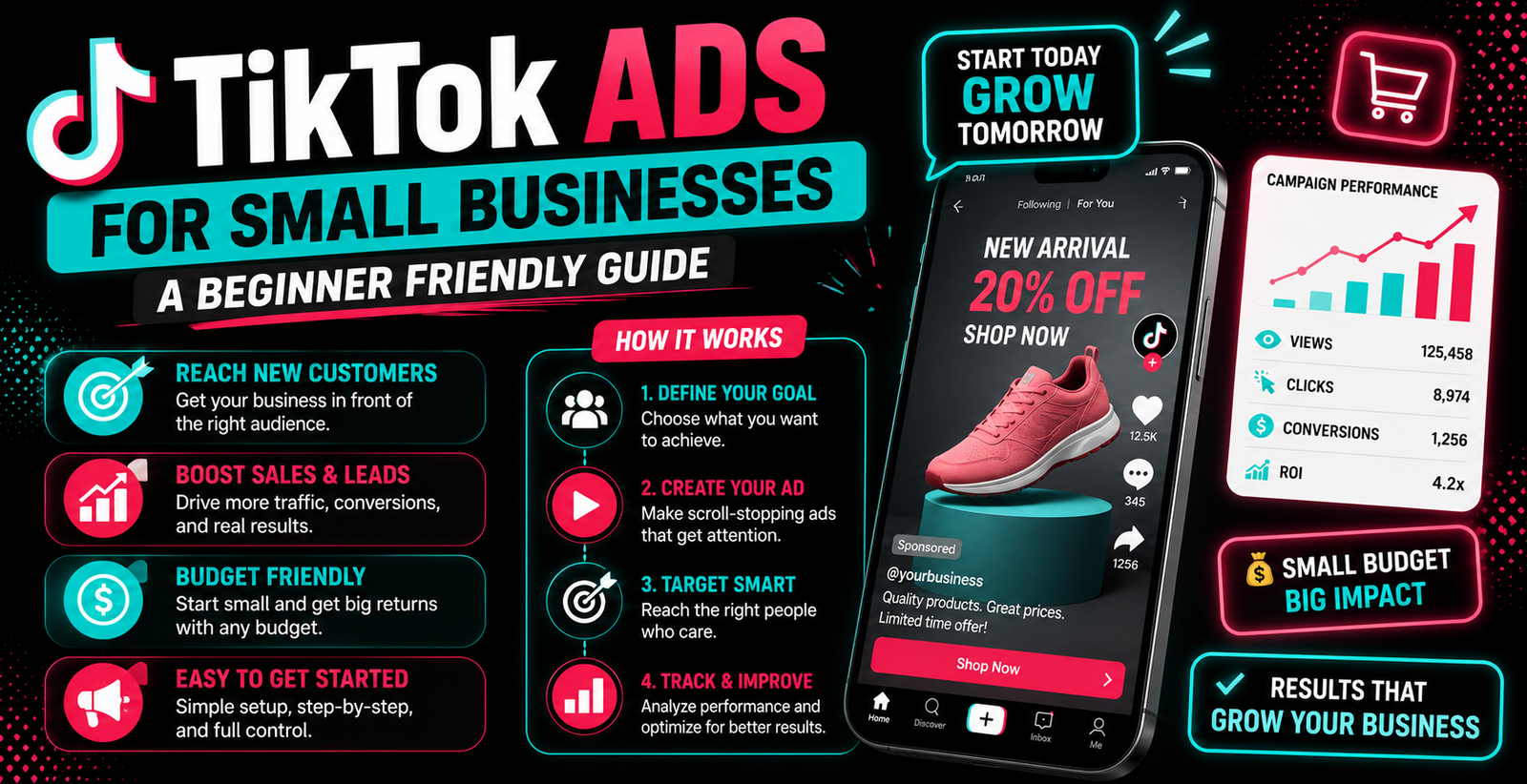

TikTok is no longer just a platform for dance videos and entertainment. It has become a powerful place for small businesses to reach new customers, build brand awareness and drive sales. Whether you run a local shop, online store, restaurant, salon, coaching business or service company, TikTok Ads can help you show your offer to people who may be interested in your products or services.
The biggest reason small businesses should pay attention to TikTok is its huge audience. DataReportal reported that TikTok had around 1.59 billion ad reachable users worldwide in January 2025. This means TikTok gives advertisers access to a very large audience across many countries and age groups.
For beginners, TikTok Ads may look confusing at first. You may see terms like campaign, ad group, objective, placement, targeting, budget and pixel. But once you understand the basic structure, it becomes easier to plan your first campaign. This guide explains TikTok Ads in simple language so small business owners can start with more confidence.
Table of Contents
ToggleWhat Are TikTok Ads and How Do They Work?
TikTok Ads are paid video ads that appear inside the TikTok app and across related placements. Businesses use these ads to reach people based on their interests, behaviour, location and other targeting options.
A TikTok ad usually looks like normal TikTok content. It may appear while users scroll their feed. The best ads do not feel too polished or forced. They feel natural, useful and entertaining. This is important because TikTok users often respond better to content that looks native to the platform.
TikTok Ads Manager is the main platform used to create and manage ads. It helps advertisers choose campaign goals, set budgets, select audiences, upload videos and track results. TikTok says Ads Manager guides new advertisers through the ad creation process and gives recommendations during setup, which can help small and medium businesses that are new to advertising on TikTok.
Why Small Businesses Should Use TikTok Ads
Small businesses often have limited budgets. This means every marketing decision matters. TikTok Ads can be useful because they allow businesses to test content, reach new people and measure results.
One major benefit is discovery. TikTok is built around content discovery. People can see videos from accounts they do not follow. This gives small businesses a chance to reach new audiences even if they do not have a large following.
Another benefit is creative flexibility. A small business does not always need a big production team. Many TikTok ads are filmed on phones. A simple video showing a product, customer result, behind the scenes process or useful tip can perform well if it feels real and helpful.
TikTok Ads are also useful for different goals. A business may use ads to increase awareness, send traffic to a website, collect leads, promote an app or sell products. TikTok’s official guidance explains that ad objectives are grouped into awareness, consideration and conversion categories.
How to Set Up a TikTok Ads Manager Account
To start advertising, you need a TikTok for Business account. After creating the account, you can access TikTok Ads Manager. From there, you can add your business information, choose your campaign goal and start building your ad.
TikTok says new advertisers need to create a TikTok for Business account before creating ads. During setup, advertisers may also enter their business website URL so TikTok can help fill in company details.
Before launching your first campaign, prepare a few basic items. You should have a clear offer, a landing page or website, a short video ad, a call to action and a small test budget. Do not start with too many campaigns at once. Beginners should start simple and learn from the first few results.
Understanding TikTok Ad Campaign Structure
TikTok Ads Manager uses a simple structure. It has three main levels, campaign, ad group and ad. TikTok explains that campaigns contain the advertising objective, campaign name and budget. Ad groups control details such as audience, placements, budget and schedule. Ads are the actual creative videos shown to users.
This structure helps you organise your advertising.
The campaign level answers the question, “What is my goal?”
The ad group level answers the question, “Who do I want to reach and how much do I want to spend?”
The ad level answers the question, “What video and message will people see?”
For example, a local bakery may create a campaign with the Traffic objective. The ad group may target people near the shop. The ad may show a short video of fresh cakes with a button to visit the website.
Choosing the Right TikTok Ad Objective
Choosing the right objective is one of the most important steps. Your objective tells TikTok what you want to achieve. TikTok says objectives are grouped into three main categories, Awareness, Consideration and Conversion. Awareness helps grow awareness of a business or product. Consideration encourages people to seek more information. Conversion encourages people to take action, such as buying a product or installing an app.
For small businesses, the best objective depends on the goal.
Use Reach if you want more people to know about your business.
Use Traffic if you want people to visit your website or landing page.
Use Video Views if you want more people to watch your video.
Use Lead Generation if you want to collect enquiries.
Use Sales if you want to sell products through TikTok Shop, website or app.
A beginner should avoid choosing an objective only because it sounds popular. Match the objective with your business goal. If your goal is website visits, choose Traffic. If your goal is enquiries, choose Lead Generation. If your goal is sales, choose Sales.
How to Set Your TikTok Ads Budget
Budget is another key part of TikTok advertising. Small businesses should start with a test budget instead of spending too much at once. The purpose of the first campaign is not only to make sales. It is also to learn what content, audience and offer work best.
TikTok’s step by step guide says advertisers can choose a daily budget or lifetime budget. A daily budget controls how much you spend per day. A lifetime budget controls how much you spend across the full campaign schedule.
For beginners, a daily budget is often easier to manage. You can watch results each day and stop or adjust the campaign if needed. Start with one or two ad groups and test a few videos. Do not spread a small budget across too many ads because each ad may not get enough data.
TikTok Ad Targeting Options for Small Businesses
Targeting helps you show ads to the right people. Small businesses can target based on location, age, gender, language, interests and behaviour. Good targeting can reduce wasted spending.
For local businesses, location targeting is very important. A salon, restaurant, clinic or repair service should target people in the service area. For online businesses, targeting can be broader, but it should still match the product and customer type.
Interest targeting can help if your product fits a clear category. For example, a fitness brand may target people interested in health and workouts. A beauty brand may target people interested in skincare or makeup. A business coach may target people interested in entrepreneurship.
However, targeting alone will not make an ad successful. The video must still be strong. A good audience with a weak video may not perform well.
Best TikTok Ad Formats for Beginners
TikTok offers different ad formats, but beginners should usually start with simple in feed video ads. These ads appear naturally while people scroll. They are easier to create and test compared to advanced campaign formats.
A good beginner ad should be short, clear and direct. It should show the product or service quickly. It should also include a clear benefit. For example, instead of saying “We sell skincare products,” a better hook is “Struggling with dry skin? Try this simple routine.”
Small businesses can also use Spark Ads. Spark Ads allow brands to boost organic TikTok posts. This can be useful if a post is already getting engagement. It helps the ad feel more natural because it comes from an existing TikTok post.
How to Create TikTok Friendly Ad Videos
TikTok friendly ads should feel like content, not traditional advertisements. Users usually do not want to watch a slow, polished commercial. They want fast, useful or entertaining videos.
Start with a strong hook in the first few seconds. Ask a question, show a problem or reveal a result. For example, “This mistake is costing small businesses sales” is stronger than “Welcome to our company.”
Keep the video simple. Show the product in use. Show a real customer result. Explain one clear benefit. Use text on screen so people can understand the message even if the sound is low.
Use vertical video. TikTok is designed for mobile viewing, so vertical videos usually feel more natural. Keep the visuals clear and avoid too much text.
End with a direct call to action. Tell viewers what to do next. Examples include “Shop now,” “Book a free consultation,” “Visit our website,” or “Send us a message.”
How to Track and Improve TikTok Ad Performance
Tracking helps you understand whether your ads are working. Do not judge ads only by views. Look at the goal of the campaign. If your goal is traffic, check clicks and landing page visits. If your goal is leads, check form submissions. If your goal is sales, check purchases and cost per purchase.
TikTok Ads Manager includes performance tracking tools. TikTok also says advertisers can set campaign settings, choose budget strategy, schedule campaigns, select placements and use automation options such as Smart Plus campaign budget and automatic placement during setup.
Small businesses should review results regularly. If one video gets many clicks but no leads, the landing page may need improvement. If one video gets low watch time, the hook may be weak. If one audience gives better results, shift more budget there.
Testing is the key. Try different hooks, offers, video styles and audiences. Keep what works and remove what does not.
Common Mistakes Small Businesses Should Avoid
One common mistake is making ads look too much like traditional commercials. TikTok users prefer natural and quick content. A phone recorded video with a strong message may perform better than an expensive but boring ad.
Another mistake is sending traffic to a weak landing page. Your ad may get clicks, but if the page loads slowly or does not explain the offer clearly, people may leave.
A third mistake is testing too many things at once. If you change the audience, video, budget and landing page all together, you will not know what caused the result.
A fourth mistake is stopping ads too early. Ads need some time and data before you judge them. At the same time, do not let a poor campaign spend endlessly. Check results and make careful changes.