Key takeaways
- YouTube’s recommendation system doesn’t push videos because of a magic trick. It tries to match each viewer with videos they’re likely to watch and enjoy.
- The main signals are click-through rate, watch time, audience retention, satisfaction (likes, surveys, “not interested”) and viewing history.
- Home, Suggested, Search and Shorts each work a little differently, so the right tactics depend on where your views come from.
- Use YouTube Analytics to find which signal is holding a video back, then fix that one thing.
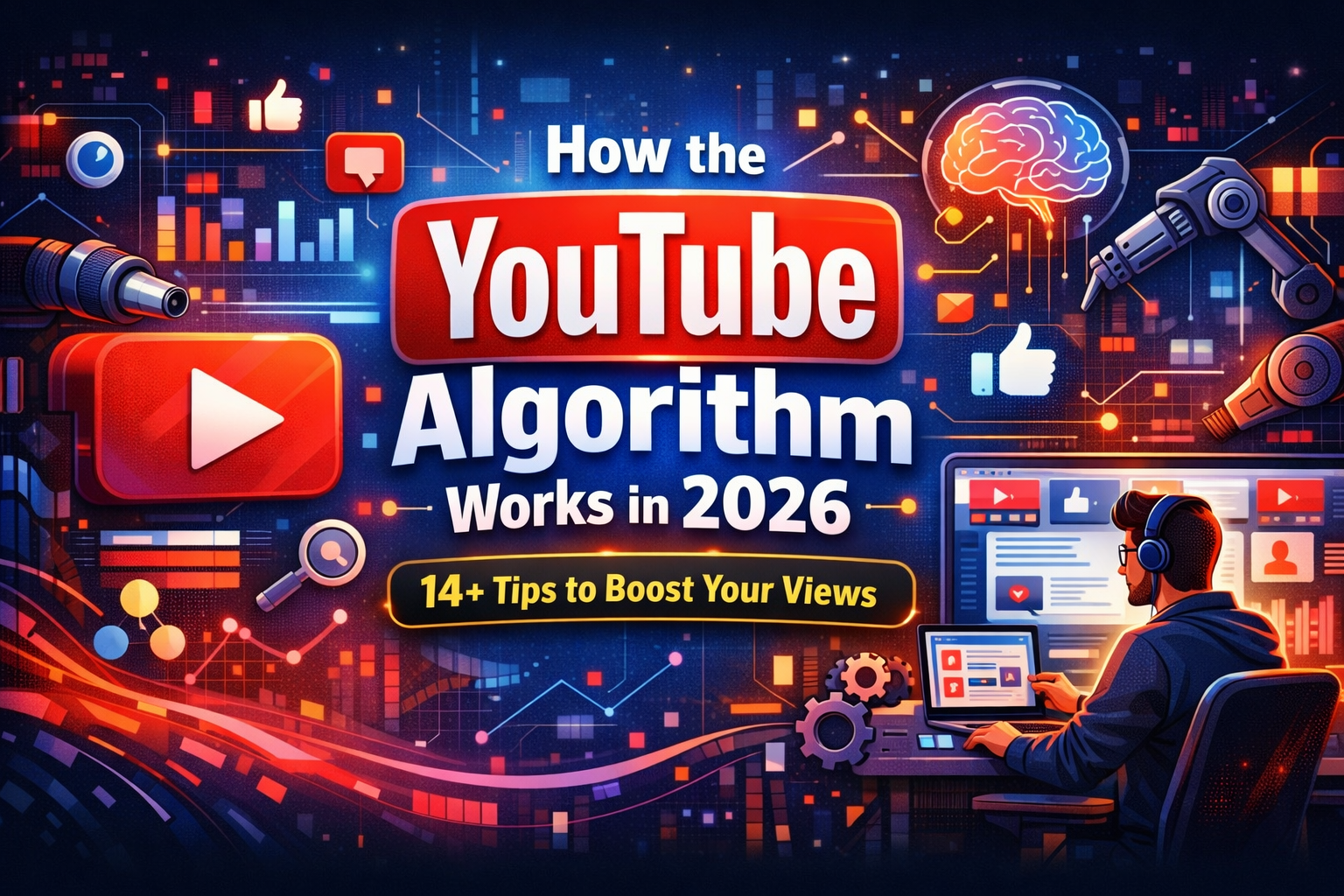
Every creator eventually asks the same question: why does one video take off while another, just as good, barely gets views? The answer usually lies in how YouTube’s recommendation system reads viewer behaviour. YouTube has said many times that it doesn’t rank videos by themselves. It ranks videos for each viewer, based on what that person is likely to watch and be satisfied with.
This guide explains how the system works in 2026, which signals matter most, how each traffic source differs, and 14 practical ways to give your videos a better chance of being recommended.
Table of Contents
ToggleWhat is the YouTube algorithm?
“The algorithm” is shorthand for the set of systems that decide which videos appear on the Home page, in Suggested videos beside and after the video you’re watching, in Search results and in the Shorts feed. YouTube’s stated goal is to help viewers find videos they’ll value and keep them coming back. Your video’s job is to prove, through how people respond to it, that it’s a good match for a particular kind of viewer.
The signals that matter most
1. Click-through rate (CTR)
CTR is the percentage of impressions that turn into views. If YouTube shows your thumbnail 1,000 times and 50 people click, your CTR is 5%. A strong CTR tells YouTube that the title and thumbnail appeal to the people it’s showing them to. On its own, though, CTR isn’t enough. A clickbait title that disappoints viewers will hurt you in the next signals.
2. Watch time and average view duration
Once someone clicks, YouTube looks at how long they watch. Videos that hold attention send a strong signal that the click was worth it.
3. Audience retention
Retention shows where people stop watching. A big drop in the first 30 seconds usually means the opening didn’t deliver what the title promised. A steady line suggests the video kept its promise.
4. Satisfaction signals
YouTube also looks at likes, dislikes, shares, comments, “Not interested” clicks and short surveys it shows some viewers. These help it tell the difference between a video people watched and one they enjoyed.
5. Viewer history and context
What a viewer has watched before, which channels they return to and even the time of day all affect what they see. This is why the same video can perform well for one audience and poorly for another.
How each traffic source works
| Traffic source | What it rewards | Focus on |
|---|---|---|
| Home (Browse) | Videos likely to interest a viewer before they search | Strong thumbnails and titles, consistent topics |
| Suggested | Videos related to what someone is watching now | Series, playlists, end screens, related topics |
| Search | Videos that best answer a query | Clear titles, descriptions, chapters, spoken keywords |
| Shorts feed | Shorts people choose to watch rather than swipe away | Instant hook, loopable endings, tight edits |
14 tips to get more views from the algorithm
- Pick one clear audience. A channel that serves one type of viewer is easier to recommend than one that jumps between unrelated topics.
- Design the thumbnail first. Decide what will make the right viewer click, then plan the video around that promise.
- Keep titles short and specific. Say what the viewer gets, ideally in under 60 characters so it isn’t cut off.
- Deliver the promise in the first 30 seconds. Skip long intros and logos. Show the result or state the answer early.
- Cut dead space. Remove pauses, repeated points and off-topic tangents. Tighter videos hold attention better.
- Add pattern changes. Change camera angle, add a graphic or switch to B-roll every so often to reset attention.
- Use chapters. Chapters help viewers find what they need and give YouTube more context for Search.
- Say your keywords out loud. YouTube can use captions and speech to understand a video, so mention the topic naturally.
- Build series and playlists. Related videos keep viewers on your channel and increase Suggested traffic.
- Use end screens well. Point to one specific next video rather than a generic “watch more”.
- Reply to early comments. It builds a community that returns for your next upload.
- Test thumbnails. Use YouTube’s built-in thumbnail testing where available, or change a thumbnail if CTR is low after the first few days.
- Post consistently. A steady schedule trains your audience to come back, which gives each new video a better start.
- Study your own data. Analytics tells you more about your audience than any general advice can.
How to diagnose a video that isn’t getting views
- Low impressions: YouTube isn’t showing the video much. The topic may be too narrow, or it may not match what your audience usually watches.
- Good impressions, low CTR: the thumbnail or title isn’t persuading people. Test a new one.
- Good CTR, poor retention: the video doesn’t deliver what the packaging promised, or the opening is too slow.
- Good retention, few returning viewers: people enjoy single videos but aren’t subscribing. Give them reasons to watch more, such as series and playlists.
Common myths
- “YouTube punishes you for not uploading.” Breaks don’t trigger a penalty, but your audience may drift if you’re away for a long time.
- “Tags are the key to ranking.” Tags play a minor role. Titles, thumbnails and the video itself matter far more.
- “Long videos always win.” Length helps only if people keep watching. A tight 8-minute video can beat a padded 20-minute one.
FAQs
How long does it take for the algorithm to pick up a video?
It varies. Some videos grow in the first 48 hours, others get picked up weeks or months later when they start matching search or suggested traffic.
Does deleting a poor video help my channel?
Usually not. YouTube evaluates videos for each viewer, so one weak video doesn’t hold back the others.
Summary
The YouTube algorithm follows viewers. If people click, keep watching and come back for more, YouTube shows your videos to more people like them. Make a clear promise in your title and thumbnail, keep it in the video, and use your analytics to fix the weakest signal one video at a time.