Key takeaways
- Facebook ranks each person’s Feed by predicting which posts they’re most likely to find valuable, using signals such as who posted, what type of post it is and how people have reacted to it.
- A growing share of the Feed now comes from recommended content, not just accounts people follow, which gives Pages a chance to reach new audiences.
- Original content, meaningful comments, shares and watch time on video matter more than likes alone.
- Engagement bait, reposted content and misleading links can reduce your reach.
Reach on Facebook can feel unpredictable. One post gets hundreds of reactions, the next barely gets seen. Most of that comes down to how Facebook’s ranking system decides what each person sees when they open the app. You can’t control the system, but you can understand what it’s looking for and give it more reasons to show your posts.
This guide explains how Facebook ranking works in 2026, the signals that matter, what Facebook says it reduces, and a practical plan for Pages and creators who want more reach.
Table of Contents
ToggleHow Facebook decides what to show
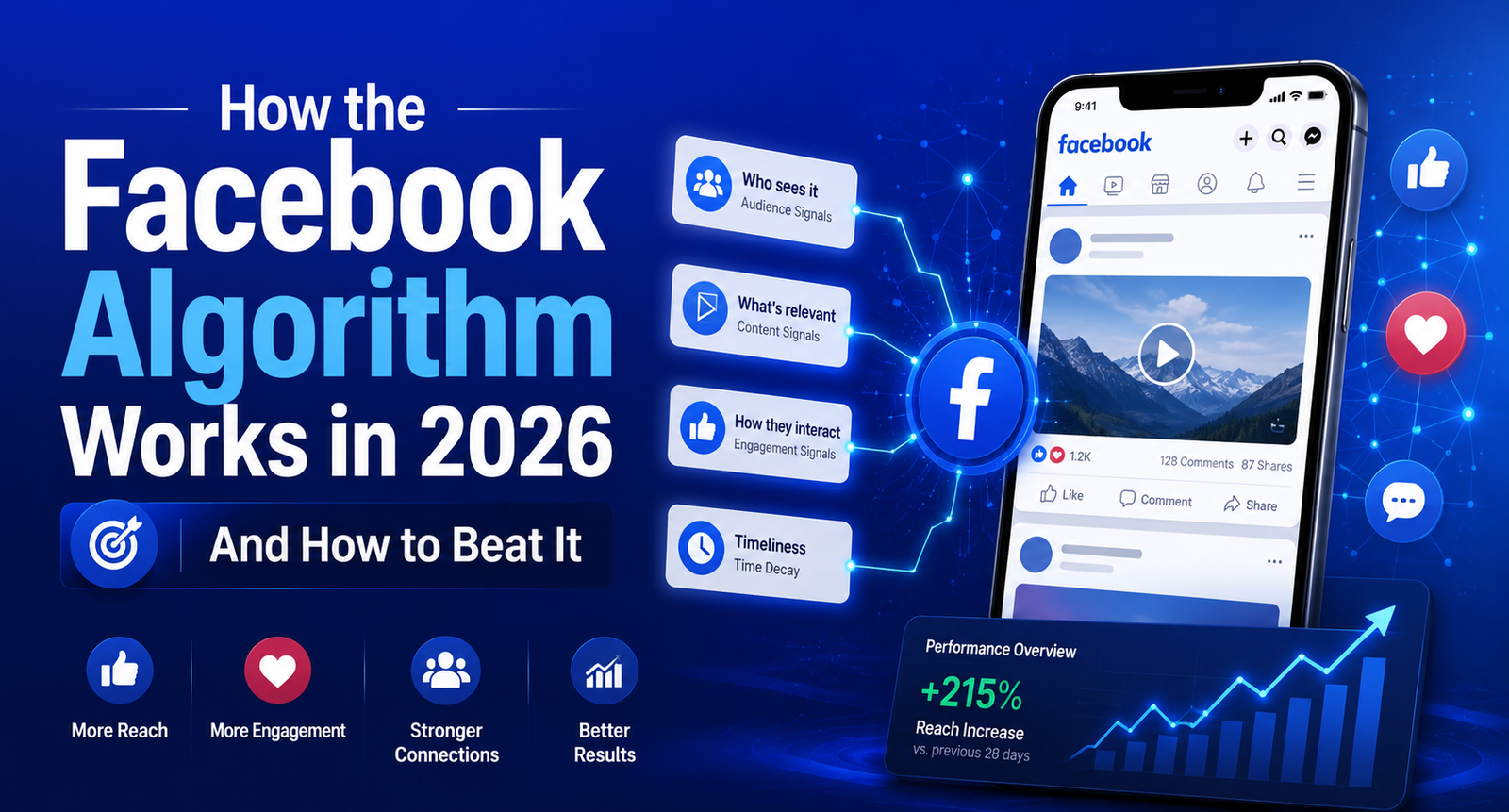
Meta has described Feed ranking as a series of steps it runs every time someone opens Facebook:
- Inventory: Facebook gathers all the posts that person could see, from friends, groups, Pages they follow and recommended content.
- Signals: for each post, it looks at thousands of signals, such as who posted it, when, the format and how others have responded.
- Predictions: it predicts how likely the person is to engage with the post in a meaningful way, for example to comment, share, watch or say they found it worth their time.
- Relevance score: it combines those predictions into a score and orders the Feed, with some adjustments to keep it varied.
Meta publishes more detail in its Transparency Center, including system cards explaining how Feed, Reels and other surfaces rank content.
The signals that matter most
Relationship
People see more from friends, family, groups and Pages they regularly interact with. If your followers often comment on your posts, they’re more likely to see the next one.
Content type
Facebook learns which formats each person prefers. Someone who watches lots of Reels sees more Reels. Someone who reads and comments on text posts sees more of those.
Meaningful engagement
Comments with real replies, shares to Messenger or other people, and time spent watching a video are stronger signals than a quick like.
Recency
Newer posts generally get priority, though a post that keeps getting engagement can stay in Feeds for longer.
Originality
Meta has said it gives priority to original creators and reduces the reach of accounts that repeatedly repost other people’s content without meaningful changes.
What Facebook reduces
Facebook’s content distribution guidelines list types of content that get less distribution even when they don’t break any rules. The most relevant for Pages are:
- Engagement bait: posts that ask people to “like if you agree”, “tag a friend” or “comment YES” just to game reach.
- Unoriginal content: reposted videos, memes and photos taken from other creators.
- Clickbait links: headlines that hide what the link is about or exaggerate it.
- Low-quality browsing experiences: links to pages full of ads or with little real content.
- Sensationalist health claims and misleading content.
How to get more reach on Facebook in 2026
- Post original content. Film your own videos, take your own photos and write your own captions. If you share something from someone else, add your own commentary or insight.
- Use Reels for discovery. Reels are widely recommended to people who don’t follow you yet. Use them to reach new audiences and posts to keep existing followers engaged.
- Start real conversations. Ask questions you want answers to, such as “What’s the one thing you’d change about your morning routine?”, not “Comment YES”.
- Reply to comments quickly. Replies create more conversation, which tells Facebook the post is worth showing to more people.
- Make posts worth sharing. Checklists, useful tips and relatable moments get shared in Messenger and groups.
- Post when your audience is active. Check Meta Business Suite insights for when your followers are online.
- Be consistent. A regular schedule keeps your followers in the habit of interacting with you.
- Use groups carefully. Take part in relevant groups as a real member. Dropping links without contributing usually backfires.
- Write natural captions. Say what the post is about in plain words, so it’s clear who it’s for.
- Review insights monthly. Look at which posts got the most shares and comments, then make more like them.
Posts vs Reels vs Stories
| Format | Best for | Tip |
|---|---|---|
| Reels | Reaching new people | Hook viewers in the first two seconds |
| Photo and text posts | Conversations with followers | End with a specific question |
| Link posts | Sending traffic to your site | Explain why the link is worth opening |
| Stories | Daily updates for loyal followers | Use polls and question stickers |
How to check whether your reach is limited
Open Meta Business Suite or Professional Dashboard and check Account status or Page quality. If any of your posts broke distribution rules, you’ll see it there, along with what to fix. Most drops in reach aren’t penalties, though. They usually come from posting less, changing topics or fewer people engaging.
FAQs
Does Facebook reduce reach for posts with links?
Not automatically, but link posts often get less engagement than native posts, so they can reach fewer people. Make the post valuable on its own and use the link as the next step.
Is boosting a post bad for organic reach?
No. Boosting is paid distribution and doesn’t lower the organic reach of your other posts.
Summary
Facebook tries to show each person the posts they’re most likely to value. Give it what it’s looking for: original content, real conversations and posts people want to share. Use Reels to reach new people, regular posts to keep followers engaged, and your insights to decide what to make next.